Key Takeaways
Grok Imagine Image 2.0 (released August 2026) ranks near the top of independent text-to-image leaderboards and delivers particularly strong cinematic lighting, atmosphere, and depth.
It is fast, relatively affordable (official API from roughly $0.04 per 1K image), and integrated with the X / Grok ecosystem, making it convenient for users already in that environment.
Text rendering is solid for short headlines and simple layouts — competitive with mid-to-high tier models, though still behind GPT Image 2.5 and Ideogram on dense multi-line work.
For teams that value atmosphere, speed, and predictable pricing, Grok Imagine 2.0 is a strong secondary or specialist tool alongside a primary generalist.
xAI’s Grok Imagine Image 2.0 arrived in August 2026 as a clear step up from the original Imagine model. It quickly climbed independent preference rankings and established a recognizable visual character: strong cinematic lighting, atmospheric depth, and a tendency toward dramatic, finished-looking scenes even from relatively short prompts.
This review focuses on how the model behaves in real creative and production contexts — where it outperforms expectations, where it still trails the leaders, and how it fits into a practical multi-model toolkit. For the full competitive landscape, see our ranking of the best AI image generators of 2026.

What Grok Imagine 2.0 Does Best
Cinematic Lighting and Atmosphere
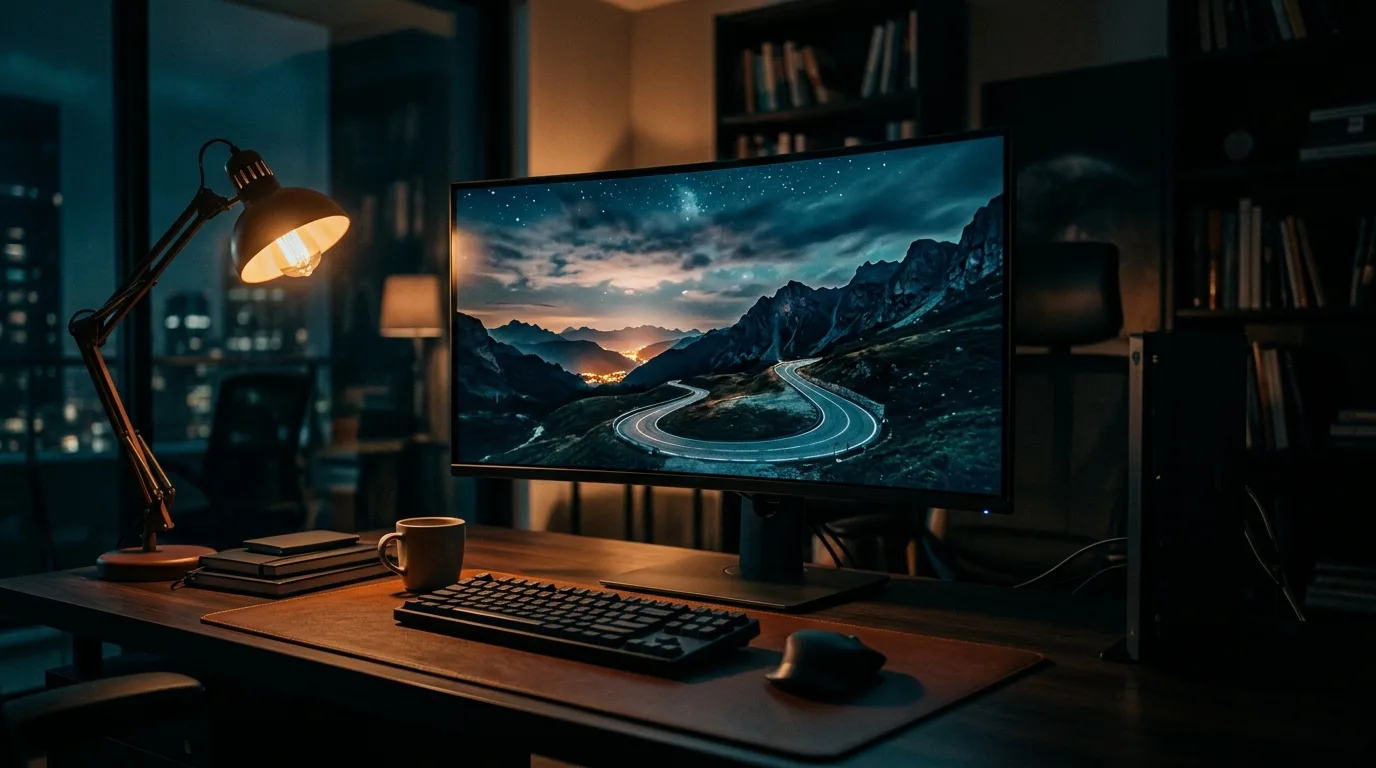
This is the model’s most consistent differentiator. Scenes often carry a sense of depth, directional light, and mood that feels closer to film stills or high-end editorial photography than to flat product renders. Golden-hour landscapes, neon-lit urban environments, dramatic interior lighting, and atmospheric weather effects tend to land with more visual presence than the same prompts produce on more neutral generalists. When the brief is about feeling and cinematic quality rather than pure documentary realism, Grok Imagine frequently delivers the most immediately usable starting points.
Speed
Generation times are competitive — often in the 20–40 second range for standard outputs under normal load. Combined with straightforward API pricing, this encourages rapid iteration. Teams that need to explore multiple directions quickly find the turnaround practical.
Text for Simple Layouts
Short headlines, single-line titles, and clean poster-style text succeed more often than in earlier generations. Independent poster tests show readable results on first attempts for many common layouts. Dense multi-line blocks, complex hierarchy, or tightly constrained typography still favor GPT Image 2.5 or Ideogram, but for light text work Grok Imagine is no longer a liability.
Integration and Access
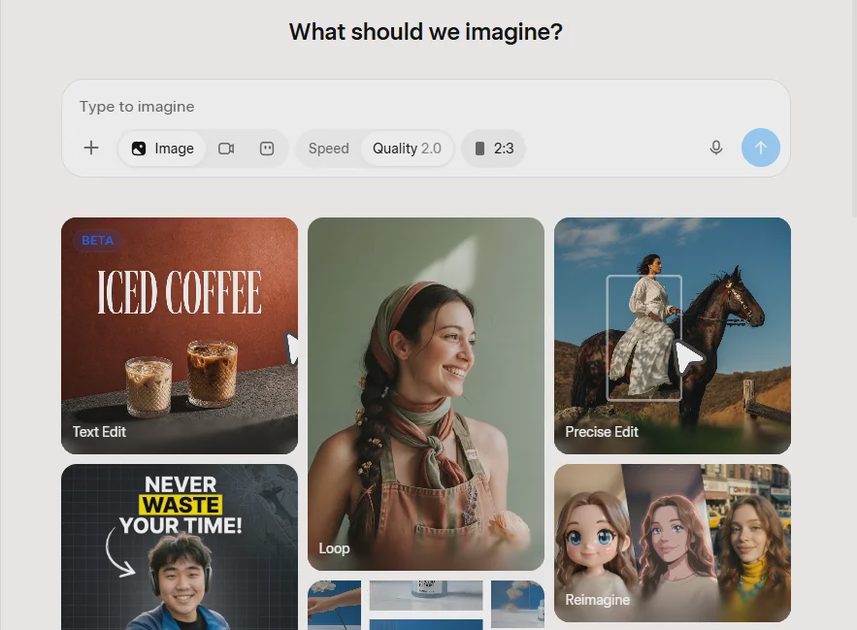
For users already inside the X / Grok ecosystem, image generation is immediately available without a separate subscription or account. The API offers clear per-image pricing, which simplifies budgeting compared with opaque credit systems. This convenience factor is real for teams that already live in that environment.
Where It Is Less Dominant
Pure Photographic Naturalism
In side-by-side tests focused on candid, unretouched photographic realism — natural skin texture, subtle imperfections, documentary lighting — Nano Banana (especially higher tiers) and the best FLUX models frequently look more like real photographs. Grok Imagine’s cinematic bias can push results toward a polished, intentional look that reads as high-end commercial rather than documentary. For lifestyle campaigns that need maximum authenticity, a secondary photoreal specialist remains useful.
Complex Multi-Constraint Prompts
When a prompt stacks many simultaneous requirements (exact composition + multiple text elements + specific product placement + precise lighting + style references), GPT Image 2.5 remains more reliable at satisfying every constraint. Grok Imagine often captures the overall spirit and atmosphere well; it is less consistent at nailing every literal detail in a single pass.
Multi-Reference Depth
Support for multiple reference images (typically up to five in current interfaces) is practical for character and product consistency, but the depth and reliability of multi-reference control still trail the best systems from Google (Nano Banana) and Black Forest Labs (FLUX). For long series work that demands tight consistency across many scenes, those models currently offer stronger tooling.
Pricing and Access
Approximate xAI API pricing (late 2026):
Grok Imagine Image 2.0 — from ~$0.04 per image at 1K (low quality settings); higher tiers and 2K resolutions range up to ~$0.08
Older Grok Imagine variants remain available at lower price points for volume or draft work
Consumer access is available through X Premium / SuperGrok tiers. Third-party aggregators sometimes list lower rates.
The pricing is transparent and competitive with other mid-to-high tier closed models. It is not the cheapest option available (FLUX Klein and Nano Banana 2.1 undercut it on pure unit cost), but the combination of speed, quality, and cinematic character makes the effective cost of a usable result attractive for many workflows.
Practical Recommendations
Reach for Grok Imagine 2.0 when
Cinematic lighting, atmosphere, and visual drama are primary goals
You need fast, high-quality results with minimal prompt engineering for mood-driven work
You are already in the X / Grok ecosystem and want integrated generation
Simple-to-moderate text layouts are part of the brief and you prefer one model rather than routing to a specialist
Reach for another model when
Maximum photographic naturalism is required → Nano Banana or FLUX
Complex, multi-line, or precisely controlled text dominates → GPT Image 2.5 or Ideogram
Tight multi-reference character or product consistency across a long series is critical → Nano Banana or FLUX
Distinctive artistic style and pure aesthetic identity are the priority → Midjourney V8.2
Lowest possible unit cost at high volume is the main constraint → Nano Banana 2.1 or FLUX open-weight options
How It Fits in a Multi-Model Toolkit
Grok Imagine Image 2.0 works best as a specialist rather than a universal default. Many teams keep GPT Image 2.5 or Nano Banana as the primary generalist and call Grok Imagine when the brief specifically benefits from cinematic atmosphere or when speed and integrated access matter. In that role it earns its place: it covers a visual territory that the more neutral generalists do not own as naturally.
The combination of competitive ranking performance, distinctive lighting character, transparent pricing, and ecosystem integration makes it one of the more interesting secondary tools available in late 2026. It is not the model you use for everything, but it is frequently the model that makes a particular class of images look the way you actually want them to look.
Bottom Line
Grok Imagine Image 2.0 shines when the work needs cinematic presence, atmospheric depth, and fast turnaround. It sits comfortably in the top tier of overall quality rankings while carrying a visual character that remains distinctive. Pair it with a strong generalist for text-heavy or highly constrained work and a photoreal specialist for maximum naturalism, and the overall system gains a useful cinematic option without adding complexity or cost bloat.
If your projects regularly call for dramatic lighting, mood-driven scenes, or quick high-quality exploration inside the X ecosystem, Grok Imagine 2.0 is worth keeping in active rotation.
Explore the Full Cluster
Deep dives, real-project notes, and practical prompt systems for every major model in the 2026 ranking.
GPT Image 2.5 Deep Dive: How Good Is OpenAI’s Current Image Model in Real Use?
Google’s Nano Banana Series Tested: Speed, Consistency, and Value in 2026
Midjourney V8.2 After Months of Daily Use: Still the Style King?
Ideogram 4.x for Text-Heavy Images: Posters, Logos, and Layouts
Seedream 5 in Practice: Commercial and Design Work Outside the Usual Suspects
Recraft for Brand Work: Vectors, Consistency, and Design Systems
Prompts That Actually Work Across GPT Image, Nano Banana, Midjourney & FLUX
What I Learned Running These Models for Real Projects All Year
For AI tool features, rules and availability, refer to their official sites.

Leave your thoughts here, too.