Key Takeaways
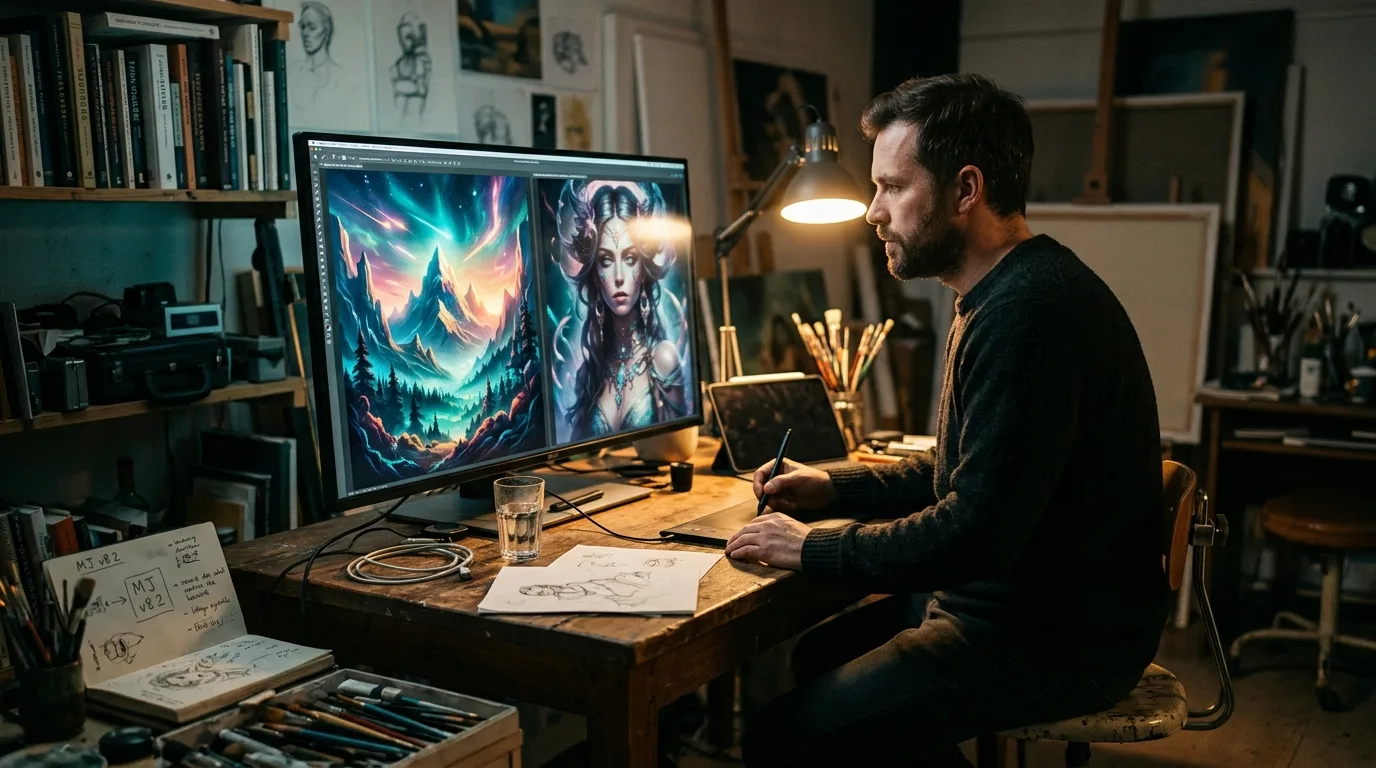
Midjourney V8.2 (default since July 2026) remains the strongest pure aesthetic and style tool among mainstream AI image generators. When distinctive visual language and finished-looking results from short prompts matter most, it still leads.
Text rendering has improved enough for short labels and simple headlines, but dense multi-line layouts and precise typography remain unreliable compared with GPT Image 2.5 or Ideogram.
No free plan. Pricing starts at $10/month (Basic). Standard ($30) is the practical sweet spot for most regular users; Pro ($60) unlocks Stealth mode and is required for companies over $1M revenue to own assets.
After months of daily use, the core value proposition has not changed: Midjourney still has better taste than most of its competitors when the brief is about feeling and visual identity rather than literal accuracy.
Midjourney has spent years occupying a distinct position in the AI image landscape: not always the most accurate, not the cheapest, not the most controllable — but frequently the one that produces images people actually want to look at. V8.2, which became the default in July 2026, continues that tradition while closing some long-standing gaps.
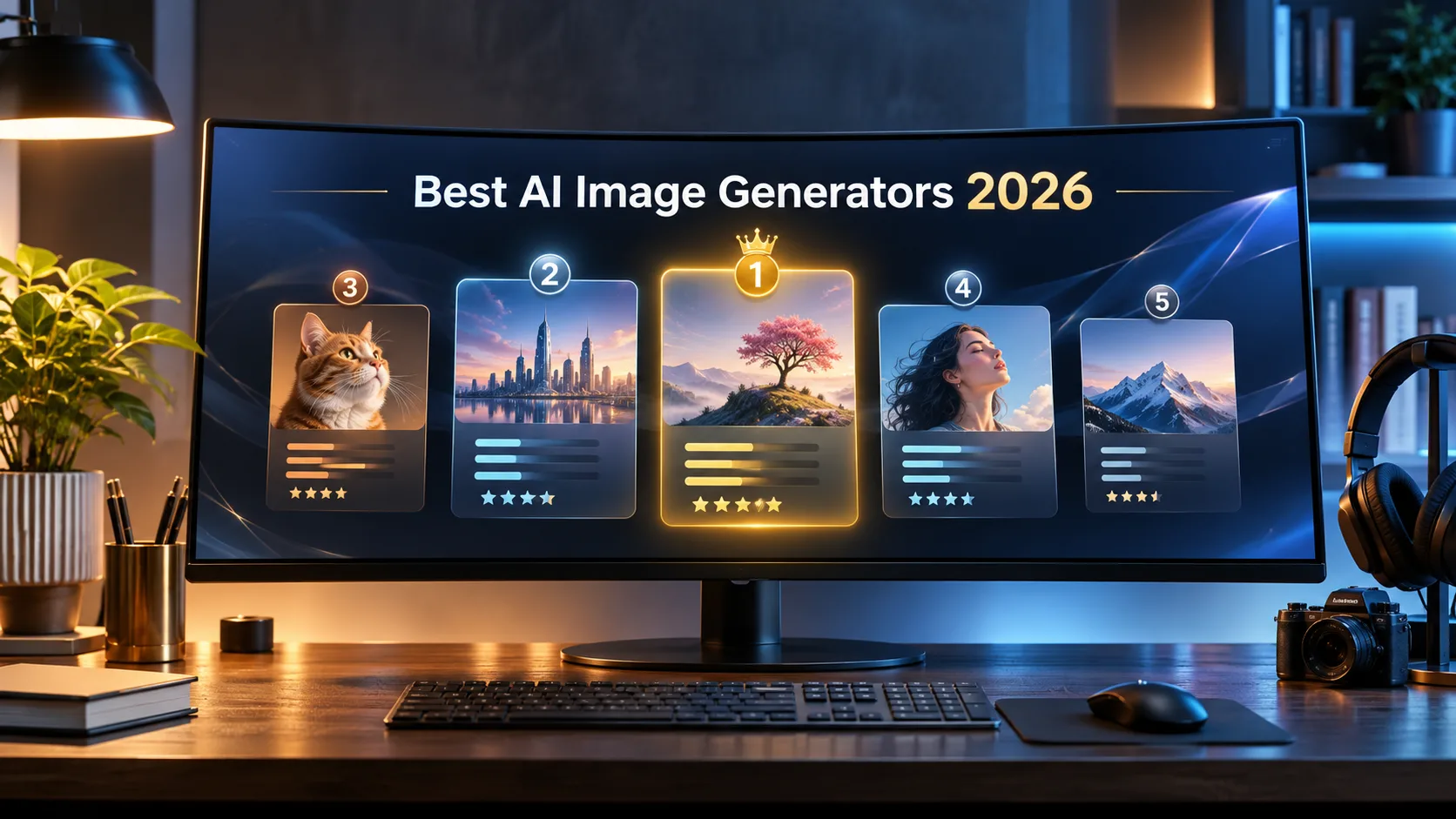
This is not a first-impression review. It is based on continuous daily use across marketing concepts, editorial illustration, mood boards, and client exploratory work since the model became default. The question is simple: after the rest of the field caught up on quality and consistency, does Midjourney still earn its place? For the broader ranking context, see our comparison of the best AI image generators of 2026.
What V8.2 Actually Improved
Midjourney describes V8.2 as more creative, bold, sophisticated, and fresh, with fewer low-quality results in a typical batch. In practice the gains fall into three areas that matter for daily work.
Aesthetic Coherence and “Taste”
The model continues to produce finished-looking images from relatively short prompts. Lighting, color grading, and composition decisions often feel intentional rather than accidental. Where GPT Image 2.5 and Nano Banana can feel like very competent generalists, Midjourney still feels like it has a point of view. That point of view is negotiable through Personalization and style references, but the default baseline remains higher in pure visual appeal for many creative briefs.
Personalization and Style Consistency
Personalization has matured into a practical tool rather than an experimental feature. Once you have trained or selected a style direction, subsequent generations stay more coherent across a project. Combined with the unified Edit Model (which replaced older separate tools for Omni Reference, Character Reference, and Retexture), it is now realistic to maintain a consistent visual language over dozens of images without constant re-prompting from scratch.
Text Rendering: Better, Still Not Primary
Short text — product labels, simple headlines, single-line titles — succeeds more often than in previous versions. Independent tests show clear improvement over V8.1. Dense multi-line layouts, precise typography, or anything that would require a designer to fix kerning and hierarchy still fail regularly enough that text-heavy work is better routed to GPT Image 2.5 or Ideogram. Midjourney is no longer a complete liability for light text, but it is not a text specialist.

Where It Still Leads
Concept art, mood boards, and editorial illustration — When the goal is emotional impact and visual identity rather than photographic accuracy.
Brand exploratory work — Generating a range of distinctive directions quickly so a client or team can react to feeling rather than specs.
Stylized realism and cinematic lighting — Especially when the brief allows (or prefers) a heightened, intentional look.
Rapid aesthetic exploration — Short prompts often produce more interesting starting points than the same prompts on more literal models.
Where It Is No Longer the Default
Pure Photorealism
For candid, documentary-style photography or product shots that must look like they came from a real camera, Nano Banana (especially higher tiers) and the best FLUX models frequently produce more natural results. Midjourney’s photorealism is excellent but tends toward a polished, intentional aesthetic rather than unretouched reality.
Complex Instruction Following and Layout Control
When a prompt contains many simultaneous constraints — exact composition, multiple text elements, specific product placement, precise lighting directions — GPT Image 2.5 is more reliable. Midjourney can interpret the spirit of a complex prompt beautifully; it is less consistent at satisfying every literal detail.
High-Volume or Cost-Sensitive Work
There is no free plan. Generation is tied to Fast GPU hours (or the slower Relax queue on higher plans). For teams generating hundreds of variants per week, the unit economics favor Nano Banana 2.1 or open-weight FLUX options. Midjourney remains a quality-and-taste tool more than a volume tool.
Pricing and Access Reality
Plan | Monthly | Fast GPU Hours | Key Notes |
|---|---|---|---|
Basic | $10 | 3.3 hours | No Relax mode. Fine for light personal use. |
Standard | $30 | 15 hours | Unlimited Relax images. Practical default for regular makers. |
Pro | $60 | 30 hours | Stealth mode. Required for companies over $1M revenue to own assets. |
Mega | $120 | 60 hours | Highest volume and priority. |
Annual billing reduces the effective monthly cost by 20%. There is still no official public API; access remains through the Midjourney website, Discord, and official apps. Stealth mode (private generations) is only available on Pro and Mega.
Commercial note: Companies with more than $1 million in annual revenue must be on Pro or Mega to own the assets they generate. This is a hard requirement in the terms and is easy to overlook until legal review.
Daily Workflow Observations
After months of use, a few patterns have become reliable:
Personalization is worth the setup time. Once a style direction is established, the reduction in re-prompting pays for itself quickly on multi-image projects.
HD (native 2K) is useful for final assets but burns Fast time faster. Draft in standard resolution and only upscale or re-generate in HD when the direction is locked.
Relax mode on Standard and above is genuinely useful for non-urgent batches. It changes the economics of exploration.
The model still benefits from a human editor who knows when to accept its taste and when to override it. Treating every output as final is a mistake; treating every output as a strong starting point is usually correct.
When to Choose Midjourney V8.2
Make it the primary tool when:
Visual identity, mood, and aesthetic coherence are the main goals
You need finished-looking concepts from short prompts
The work is exploratory, editorial, or brand-directional rather than specification-driven
You value Personalization and long-term style consistency across a project
Reach for something else when:
Text accuracy or complex multi-constraint layouts dominate → GPT Image 2.5 or Ideogram
Maximum photographic naturalism is required → Nano Banana
High volume and low unit cost are priorities → Nano Banana 2.1 or FLUX open-weight
You need a public API or self-hosted pipeline → other tools
Bottom Line After Months of Use
Midjourney V8.2 is still the style king for a large class of creative work. The rest of the field has closed the gap on raw quality, consistency, and text, but the combination of aesthetic judgment, Personalization, and the ability to produce compelling images from minimal prompting remains distinctive.
It is no longer the only tool you need — and for many production pipelines it should not be the only tool you use. Paired with a strong generalist (GPT Image 2.5) and a strong photoreal/value option (Nano Banana), it continues to earn its subscription as the specialist that makes the work look like it has a point of view.
If your work lives or dies by visual identity and emotional impact, V8.2 is still worth the daily seat. If your work is primarily about accuracy, text, or volume, it is a valuable secondary tool rather than the default.
Explore the Full Cluster
Deep dives, real-project notes, and practical prompt systems for every major model in the 2026 ranking.
GPT Image 2.5 Deep Dive: How Good Is OpenAI’s Current Image Model in Real Use?
Google’s Nano Banana Series Tested: Speed, Consistency, and Value in 2026
Grok Imagine Image 2.0: Cinematic Results and Where It Actually Shines
Ideogram 4.x for Text-Heavy Images: Posters, Logos, and Layouts
Seedream 5 in Practice: Commercial and Design Work Outside the Usual Suspects
Recraft for Brand Work: Vectors, Consistency, and Design Systems
Prompts That Actually Work Across GPT Image, Nano Banana, Midjourney & FLUX
What I Learned Running These Models for Real Projects All Year
For AI tool features, rules and availability, refer to their official sites.
Leave your thoughts here, too.