Key Takeaways
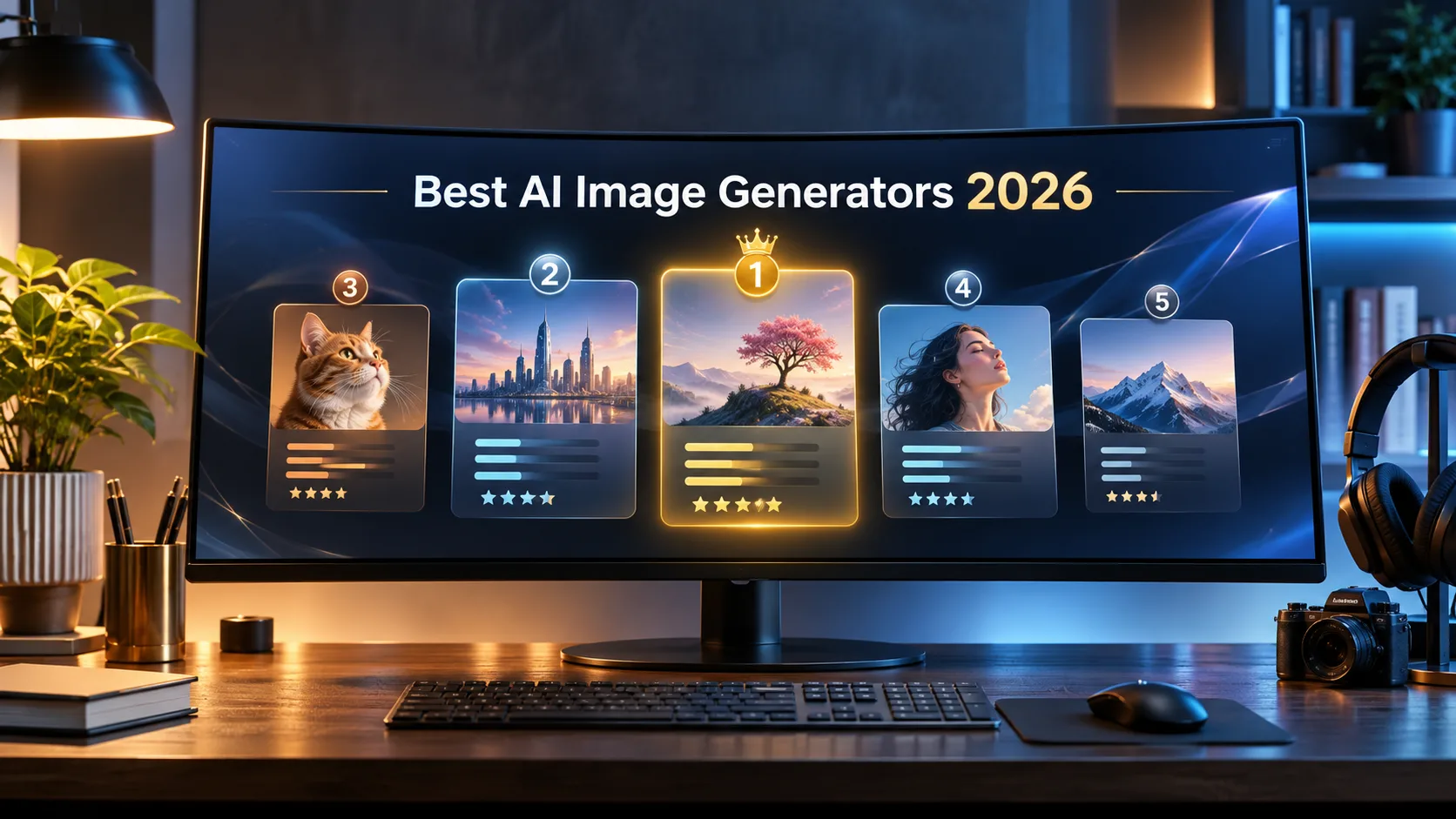
GPT Image 2.5 (especially the Sunburst variant) currently leads most independent blind-preference leaderboards for overall quality, complex prompt following, and text rendering.
Google’s Nano Banana series offers the strongest combination of speed, editing consistency, and value — with a capable free tier that still competes with paid options.
Midjourney V8.2 remains the preferred choice when distinctive artistic style and aesthetic control matter more than literal accuracy.
FLUX 3 / FLUX.2 models lead in photorealism and precise spatial control; the open-weight Klein variants make high-volume or private workflows practical.
No single model wins every use case. The right tool depends on whether you need text accuracy, character consistency, artistic direction, commercial safety, or lowest cost per image.
By late 2026 the AI image generation landscape has settled into a clearer hierarchy than the chaotic years that preceded it. Independent arenas, large-scale blind human preference tests, and real production use all point to the same small group of models at the top. The differences between them are now less about raw capability and more about what each model is optimized for.
This ranking synthesizes the major public leaderboards (including Arena text-to-image results), side-by-side testing across common professional tasks, and practical considerations of speed, cost, editing behavior, and commercial usability. It is written for people who actually ship images — designers, marketers, product teams, and independent creators — rather than for benchmark chasing.

2026 Overall Ranking
Rank | Model | Best For | Standout Strength | Access / Starting Cost |
|---|---|---|---|---|
1 | GPT Image 2.5 | Overall quality & complex instructions | Text accuracy + prompt fidelity | ChatGPT (limited free) / API ~$0.05–0.21 per image |
2 | Nano Banana series | Editing, consistency, value | Speed + multi-reference control | Gemini free tier + paid; API from ~$0.034 |
3 | Midjourney V8.2 | Artistic style & mood | Aesthetic distinctiveness | From $10/mo (no free plan) |
4 | FLUX 3 / FLUX.2 | Photorealism & control | Spatial accuracy + open options | API from ~$0.009–0.07; open weights available |
5 | Grok Imagine 2.0 | Cinematic scenes | Lighting & atmosphere | X Premium / API |
6 | Ideogram 4.x | Text-heavy design | Typography reliability | Free credits + from $20/mo |
7 | Seedream 5 | Commercial & design versatility | Balanced quality + cost | API ~$0.04–0.07 range |
8 | Recraft | Brand systems & vectors | SVG + consistency tools | Free (public images) + paid private |
The top two positions are close enough that personal workflow preference often decides the winner. GPT Image 2.5 currently holds the edge in pure preference rankings and complex instruction following. Nano Banana frequently wins on iteration speed, multi-image reference handling, and cost efficiency for high-volume work.

Pricing & Access Comparison
Model / Platform | Free Tier | Entry Paid | Typical Cost / Image | API | Open Weights |
|---|---|---|---|---|---|
GPT Image 2.5 | Limited in ChatGPT Free | ChatGPT Plus $20/mo | ~$0.05–0.21 (quality dependent) | Yes | No |
Nano Banana 2.1 / Pro | Yes (Gemini app) | Google AI plans from ~$5–20 | ~$0.034–0.15 (resolution dependent) | Yes | No |
Midjourney V8.2 | None | Basic $10/mo | Subscription (GPU hours) | No public API | No |
FLUX 3 / FLUX.2 | Self-host possible | Pay-as-you-go | ~$0.009–0.07 | Yes | Yes (Klein variants) |
Grok Imagine 2.0 | Limited via X | X Premium / API | Varies | Yes | No |
Ideogram 4.x | Weekly credits (public images) | Plus $20/mo | ~$0.03–0.10 | Yes | Limited |
Seedream 5 | Platform dependent | API / platform plans | ~$0.04–0.07 | Yes | No |
Recraft | Yes (images public) | From ~$12/mo | Low on paid plans | Yes | No |
Adobe Firefly | Limited daily | From $9.99/mo | Credit-based | Limited | No |
Prices fluctuate and often depend on resolution, quality setting, and whether you use batch endpoints. The figures above reflect typical published rates around late October / early November 2026. Always check the vendor’s current pricing page before budgeting high-volume work.
How the Models Actually Differ
Text Rendering & Layout Control
When an image must contain readable words — posters, packaging, UI mockups, social graphics with headlines — GPT Image 2.5 and Ideogram lead. Both handle multi-line text, mixed fonts, and precise placement far more reliably than earlier generations. Midjourney has improved but still lags on longer or tightly constrained text.
Photorealism & People
FLUX models and the higher tiers of Nano Banana produce the most convincing skin texture, lighting, and anatomical consistency in 2026 testing. Grok Imagine often delivers the strongest cinematic lighting and atmospheric depth. Midjourney remains excellent at stylized realism but is less literal.
Editing & Character Consistency
Google’s Nano Banana series stands out for conversational editing and maintaining the same person or product across multiple generations. GPT Image 2.5 is also strong in multi-turn refinement. Models that support multiple reference images make brand or character work significantly more practical than single-shot generation.
Artistic Direction
Midjourney V8.2 continues to be the default for teams that care more about distinctive visual language than photographic accuracy. Its aesthetic coherence across a project is still difficult to match with pure prompt engineering on other systems.
Cost, Speed & Access
Nano Banana (especially the non-Pro variants) and certain FLUX open-weight options deliver the best value for high-volume work. GPT Image 2.5 is more expensive per image at peak quality settings but often requires fewer retries, which can offset the difference. Midjourney remains subscription-based with no official public API.

Commercial Rights & Indemnity
Most major tools now grant commercial use of outputs on paid plans, but the fine print differs sharply on ownership, training data, and especially IP indemnity.
OpenAI — You generally own the output. Eligible API and Enterprise plans include copyright indemnity with exclusions (modified output, trademark claims, etc.).
Google (Nano Banana / Gemini) — Commercial use is allowed. Qualifying Google Cloud services offer output indemnity with standard exclusions.
Midjourney — Commercial use on paid plans, but companies over $1M annual revenue need Pro or Mega to own assets. No strong public indemnity.
Adobe Firefly — Still the strongest enterprise indemnity story for eligible Firefly outputs under the right contract. Non-Adobe models inside Firefly are treated differently.
Recraft / Ideogram free tiers — Free images are often public and may not carry full commercial rights. Paid private plans change this.
Always verify the current terms for your specific plan and use case. Indemnity is rarely automatic and frequently requires an enterprise-level agreement.
Choosing by Real Use Case
Marketing & social graphics with text
Start with GPT Image 2.5 or Ideogram. Both reduce the need for post-generation text fixes.
Product photography & lifestyle scenes
Nano Banana Pro or FLUX for photorealism; Grok Imagine when atmosphere matters more than absolute accuracy.
Brand systems, logos & consistent characters
Recraft for vector and brand kits; Nano Banana for multi-reference consistency; Midjourney for strong style reference workflows.
Concept art & illustration
Midjourney V8.2 remains the strongest pure aesthetic tool. Seedream is a capable alternative when cost or different stylistic range is needed.
High-volume or private generation
FLUX Klein open-weight models or Nano Banana’s faster tiers. Local deployment becomes practical when privacy or unit economics dominate.
Conservative commercial work
Adobe Firefly still carries the strongest enterprise indemnity story, though it rarely leads pure quality rankings.
What Changed in 2026
Three shifts defined the year. First, text rendering crossed a practical threshold for most professional uses — the gap between “usable” and “needs fixing in Photoshop” narrowed dramatically for the leading models. Second, multi-reference and conversational editing became table stakes rather than differentiators. Third, open-weight options (particularly within the FLUX family) matured enough that serious production pipelines no longer require exclusive reliance on closed APIs.
The result is less drama about which model is “best” overall and more clarity about which model is best for a specific job. The ranking above reflects that reality: a clear top tier, with meaningful specialization underneath.
Methodology
This ranking draws on:
Public Arena text-to-image leaderboard data (late October 2026 snapshots)
Independent blind-preference studies and side-by-side tests published in 2026
Published API and subscription pricing from vendor pages (checked around late October / early November 2026)
Commercial-use and indemnity language from current terms of service
Hands-on production experience across marketing, product, and design workflows
Rankings prioritize real-world decision factors (quality for the job, cost of a usable result, editing reliability, commercial practicality) over pure Elo scores. Leaderboards move; always re-check current pricing and terms before large commitments.
Explore the Full Cluster
Deep dives, real-project notes, and practical prompt systems for every major model in this ranking.
GPT Image 2.5 Deep Dive: How Good Is OpenAI’s Current Image Model in Real Use?
Google’s Nano Banana Series Tested: Speed, Consistency, and Value in 2026
Midjourney V8.2 After Months of Daily Use: Still the Style King?
Grok Imagine Image 2.0: Cinematic Results and Where It Actually Shines
Ideogram 4.x for Text-Heavy Images: Posters, Logos, and Layouts
Seedream 5 in Practice: Commercial and Design Work Outside the Usual Suspects
Recraft for Brand Work: Vectors, Consistency, and Design Systems
Prompts That Actually Work Across GPT Image, Nano Banana, Midjourney & FLUX
What I Learned Running These Models for Real Projects All Year
For AI tool features, rules and availability, refer to their official sites.

Leave your thoughts here, too.