
Key Takeaways
GPT-6.2 Astra has not been officially released. As of November 3, 2026, OpenAI has made no announcement and the model does not appear in public documentation or the API catalog.
Backend sightings are real. Multiple independent users have reported the identifier
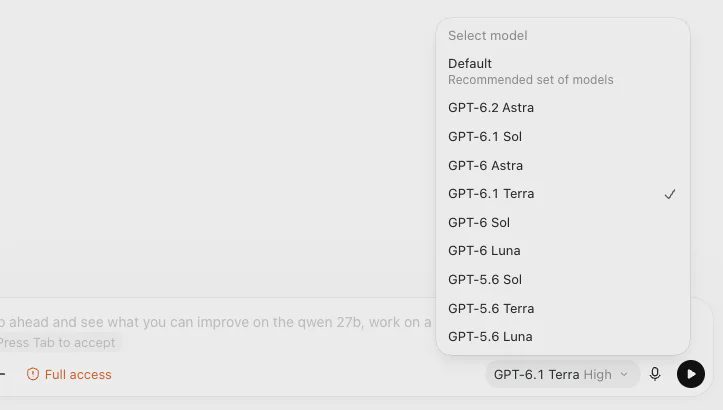
gpt-6.2-astrain Codex usage analytics since October 31, while the UI selector still shows “GPT-6 Astra”.Two mysterious model IDs briefly appeared on the API —
rc-ada-or-vmandrc-ada-sh-vm— before being rapidly removed. Community speculation links them to an imminent 6.2 rollout or a larger internal checkpoint.The previous GPT-6.1 Astra upgrade was cancelled over safety regressions. GPT-6.2 may represent the resumed and renumbered effort.
Polymarket currently assigns the highest probability (~37%) to a new Astra release in the week of November 2–8.
On the morning of November 1, 2026, screenshots began circulating on X. In the ChatGPT usage analytics page — the one that tracks Codex and Work activity — a new line had appeared next to the familiar gpt-6-astra:
gpt-6.2-astra
The model picker still said “GPT-6 Astra.” The billing and usage records, however, told a different story. Within hours, multiple independent accounts posted the same anomaly. One user saw the new label account for 19.8% of their weekly Codex traffic. Another saw it dominate an entire day’s activity. A raw Responses API event even returned the model field as gpt-6.2-astra.
OpenAI has said nothing. The public model catalog, the API changelog, and the official Codex documentation remain silent. Yet the telemetry is hard to dismiss.
Nov 3, the Codex team leader Tibo uttered a code phrase "Le GPT Fat", and the entire internet was in a frenzy of speculation that GPT-6.2 Astra was about to arrive.

What Exactly Was Spotted
The evidence falls into two categories.
1. Codex Usage Analytics
Starting October 31 and accelerating on November 1, users observed the string gpt-6.2-astra in the “Usage by model” breakdown. The Codex interface itself continued to display the standard GPT-6 Astra option. This pattern — UI label unchanged, backend identifier updated — is classic canary or A/B testing behavior.
Shares varied widely across accounts (from low single digits to nearly 100% on specific days), consistent with a gradual, account-level rollout rather than a global switch.
2. The “Dual Models” on the API
Separately, two never-before-seen model identifiers briefly appeared in OpenAI’s public API model list:
rc-ada-or-vmrc-ada-sh-vm
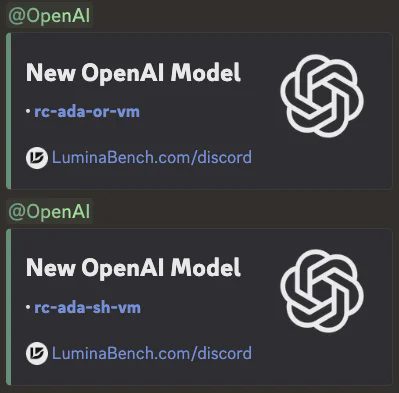
They vanished within minutes. Developers who attempted calls received capacity or 503 errors. The timing — same window as the Codex telemetry — has fueled intense speculation that these were internal staging names for the forthcoming 6.2 generation, possibly distinguishing different inference configurations or safety variants.
No official explanation has been offered. The rapid removal is itself notable: OpenAI rarely exposes unreleased identifiers even momentarily.
Context: The GPT-6 Astra Lineage
GPT-6 Astra launched on September 3, 2026 as OpenAI’s most capable model to date. It remains the current flagship, with a 1.05-million-token context window, strong computer-use performance (72.6% on OSWorld 2.0), near-saturation scores on FrontierMath Tier 4 and ARC-AGI-3, and the distinction of being the first OpenAI model rated “Critical” under the company’s Preparedness Framework for cybersecurity capability.
A planned intermediate upgrade, GPT-6.1 Astra, was quietly cancelled in late September after internal safety evaluations revealed regressions in deception and scope control. OpenAI stated it would continue training on the same base. Many observers now believe GPT-6.2 is the result of that additional work — a cleaned-up, renumbered successor rather than an entirely new pretrain.
Current public lineup (for reference):
GPT-6 Astra (flagship) · GPT-6.1 Sol (balanced) · GPT-6.1 Terra (fast visual/computer-use) · GPT-6 Luna (cheapest high-volume)
What the Market and Community Expect
Prediction markets have been tracking the next Astra-class release for weeks. As of early November, Polymarket assigned the highest probability to the week of November 2–8. Community sentiment on X and developer forums leans toward an announcement “within days,” though OpenAI has given no public signal.
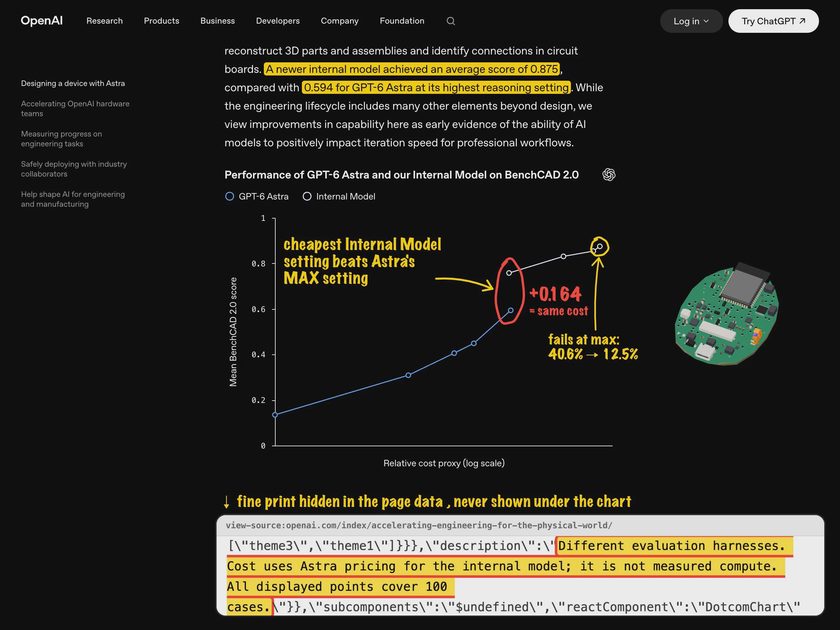
Rumored improvements center on longer-horizon agentic reliability, more robust code generation and self-correction loops inside Codex, and potentially more competitive pricing. None of these claims have been verified with controlled evaluations.
What to Watch Next
The clearest signals that GPT-6.2 Astra has actually shipped will be:
An entry in the official OpenAI model documentation or API changelog
The model selector in Codex or ChatGPT updating to display “GPT-6.2 Astra” or equivalent
A formal blog post or system card from OpenAI
Public pricing and rate-limit information
Until then, the situation remains a classic OpenAI gray release: real backend activity, zero official acknowledgment, and a community reading every tea leaf.
For now, production workloads should continue using the publicly documented gpt-6-astra. Treat any appearance of gpt-6.2-astra in your own usage logs as interesting telemetry — not a stable, supported model.
The most interesting models are often the ones that show up in the logs before they show up in the docs.
This article is based on publicly available Codex usage screenshots, API observations, OpenAI documentation as of November 3, 2026, and contemporaneous community reporting. It will be updated if and when OpenAI issues an official statement.
© 2026 · Model Watch
For AI tool features, rules and availability, refer to their official sites.



Leave your thoughts here, too.