Key Takeaways
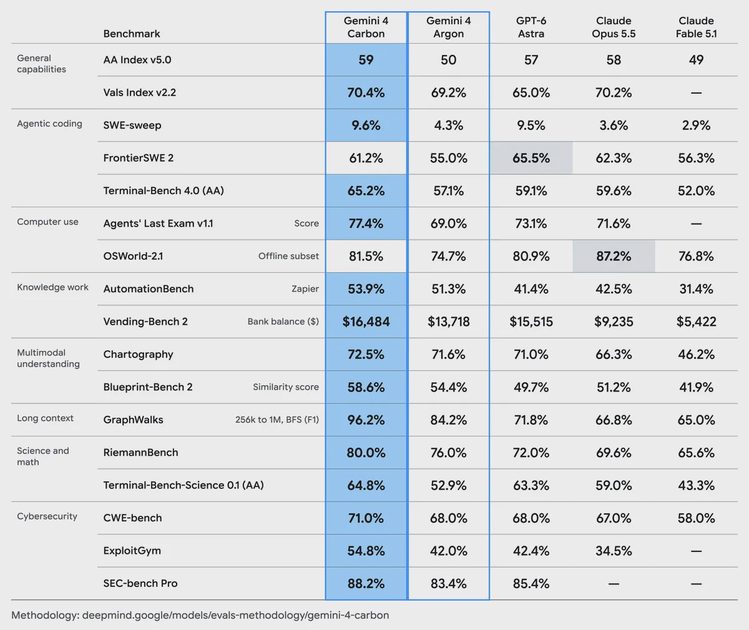
Google announced Gemini 4 Carbon on October 28, 2026 — its strongest model yet, ranking #1 on Artificial Analysis Intelligence Index v5.0 with a score of 59.
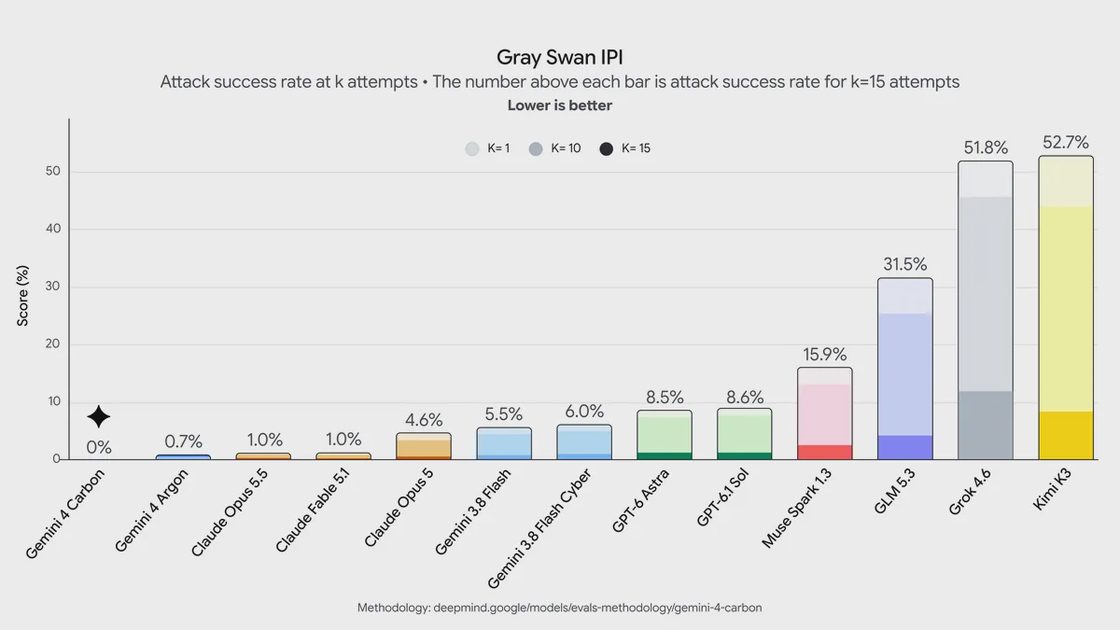
Carbon shows major gains in cybersecurity (vulnerability finding, exploitation, patching) and long-horizon agentic coding that can run for days.
It launches at the same introductory price as Argon: $2 / $10 per million input/output tokens.
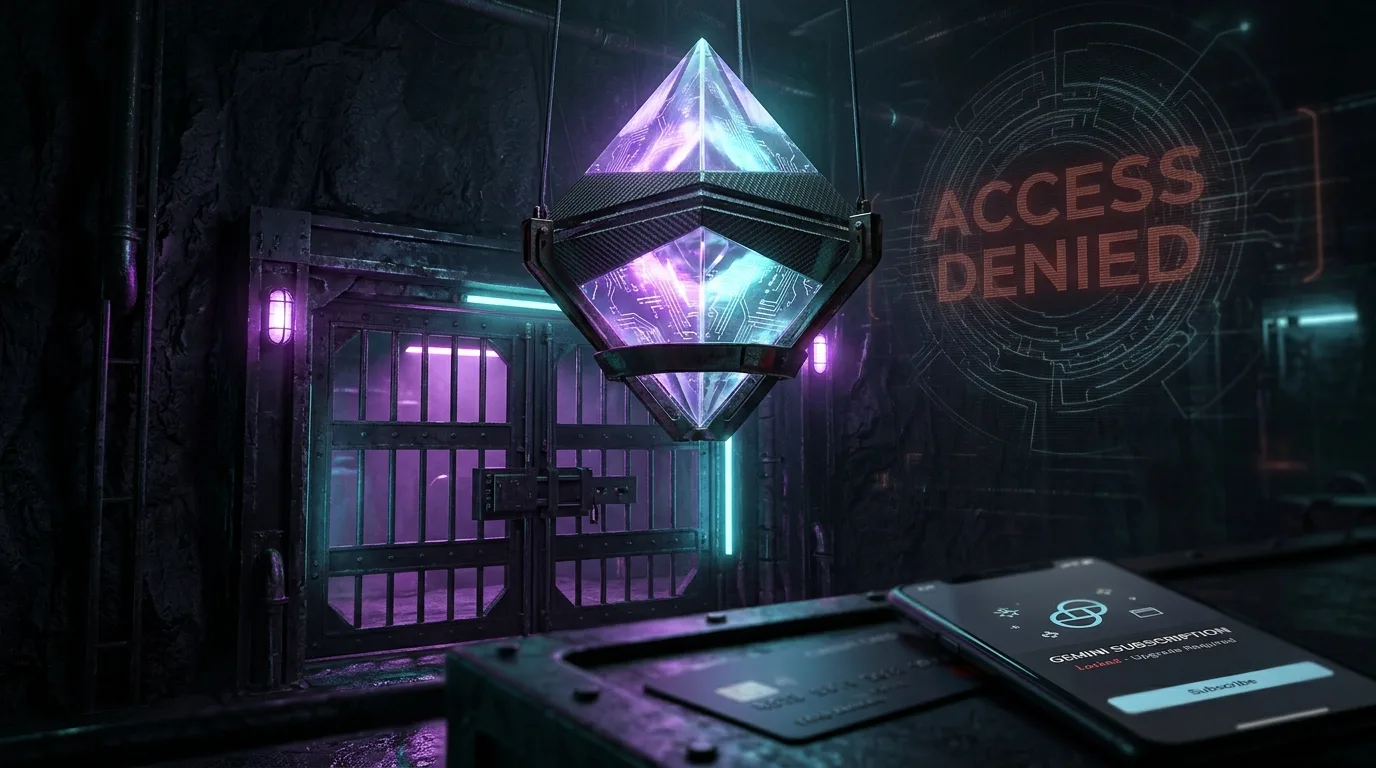
Despite the price match and the hype, Carbon is currently locked behind Google’s Fairwind Program and is only available to a small group of vetted cyber defenders.
Paid Gemini Advanced and Ultra subscribers still cannot access it. Google has given no firm public release date.
The staged rollout is deliberate: Google is prioritizing safety testing and government pre-release review before wider availability.
If you’re a Gemini Advanced or Ultra subscriber, you already write a check every month. You expected the latest and greatest. Then Google dropped Gemini 4 Carbon — and locked the door.
Two weeks after Gemini 4 Argon became broadly available, Google DeepMind announced Carbon on October 28. They called it their strongest model yet. Independent benchmarks put it at the top of the Artificial Analysis Intelligence Index. Cybersecurity scores jumped. Long-horizon coding got a serious upgrade. And the price? Identical to Argon.
So why can’t the people who already pay for Gemini touch it?

The Tease Is Real
Google’s own blog post is careful. Carbon is positioned as a “next frontier model” with state-of-the-art cybersecurity and long-horizon capabilities. On paper it looks like a clear step up from Argon. In practice, the only people currently using it are a hand-picked group of cybersecurity professionals inside Google’s Fairwind Program.
Right now, Carbon is not in the Gemini app, not in AI Mode in Search, not in AI Studio, and not in the public Gemini API. Paid users are still on Argon.
This is the same playbook Google used with Argon itself: announce first, gate tightly, expand later. The difference this time is that the performance gap is larger and the security claims are louder. Google is participating in the U.S. government’s voluntary pre-release testing process. That alone explains a lot of the caution.
What Carbon Actually Improves
The numbers Google published are impressive, even if you take them with the usual grain of salt:
Benchmark | Carbon | Argon | Notes |
|---|---|---|---|
Artificial Analysis Index v5.0 | 59 | 50 | #1 overall |
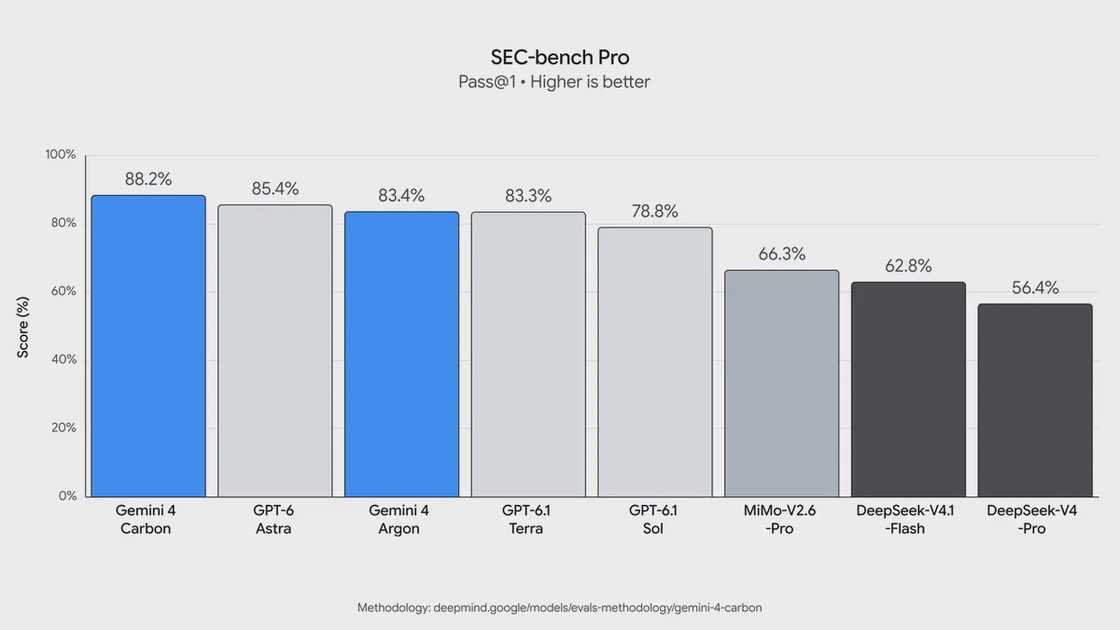
SEC-bench Pro (vuln finding) | 88.2% | — | Leading the pack |
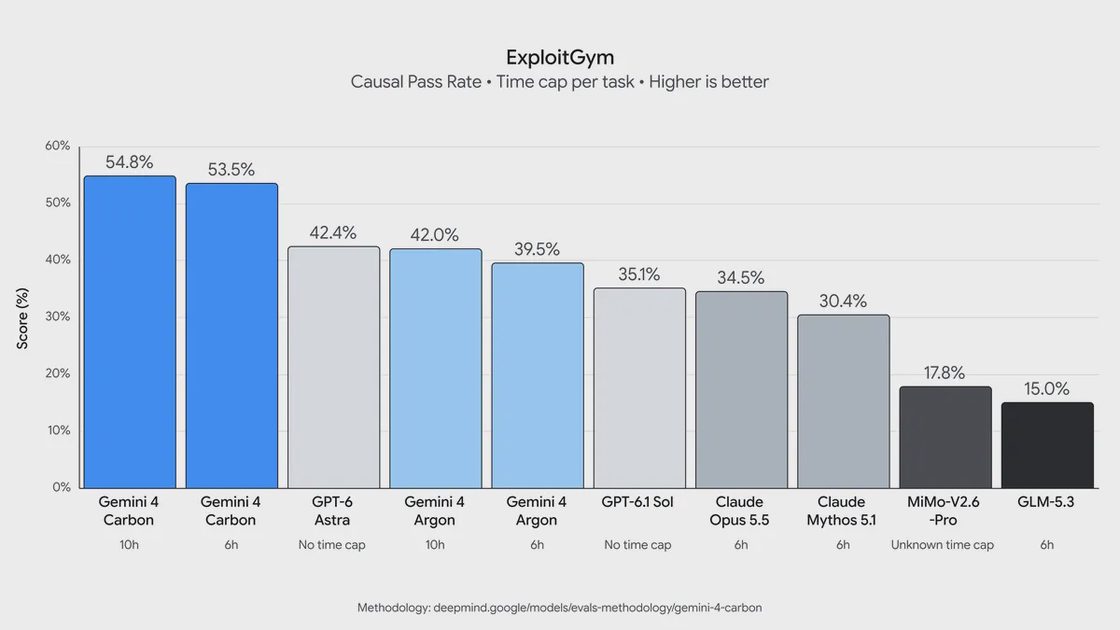
ExploitGym | 54.8% | — | Significant jump |
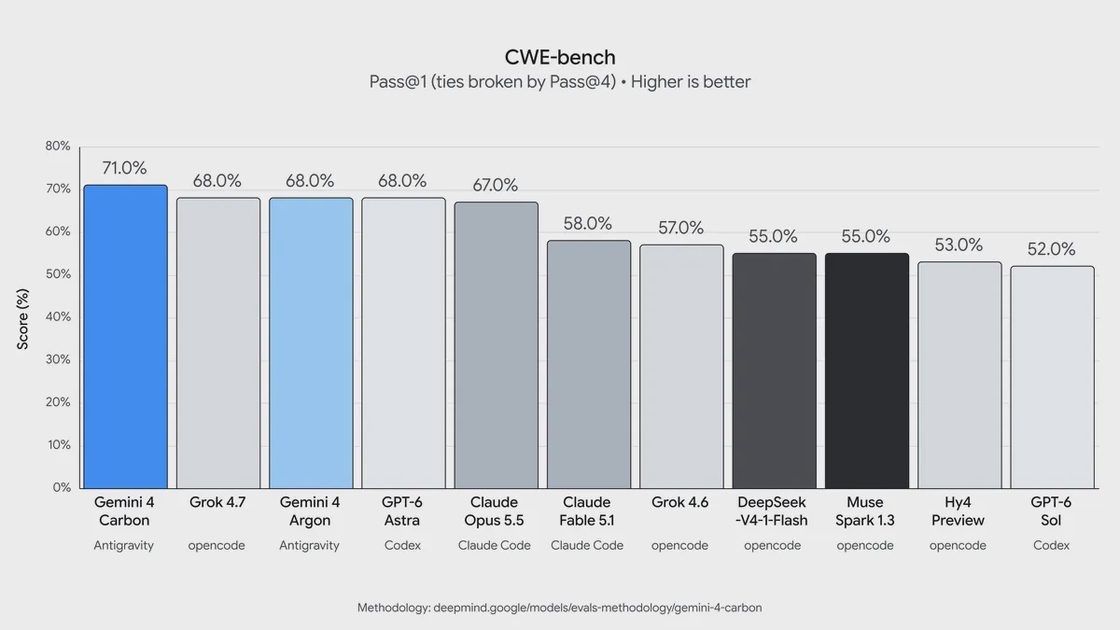
CWE-bench (patching) | 71.0% | — | Strong remediation |
Internal secure-code success | >2× Argon | — | Google claim |
Carbon is also better at multi-day autonomous coding workflows. Google’s internal teams report that the model can keep working through dead ends for days. That is the kind of capability that makes developers lean forward — and then realize they still can’t call the model.
Same Price, Different Access
Here’s the part that stings for paying customers. Carbon’s introductory API pricing is identical to Argon’s:
$2 input / $10 output per million tokens
Cached input at 95% off. Later it moves to $4 / $20.
Price parity is nice. Access parity would be nicer. Right now the only way to get near Carbon is through Google Cloud account teams and the Fairwind Program. Most individual subscribers and even many enterprise customers are still waiting.
Why the Gate?
Google is not being coy about the reason. Carbon’s strength in vulnerability discovery and exploitation is exactly why they are moving carefully. A model that is this good at finding and validating real-world software flaws is also a dual-use tool. The company is clearly prioritizing controlled testing with trusted cyber defenders and government partners before it opens the floodgates.
That is responsible. It is also frustrating if you already pay for the top Gemini tier and keep seeing “coming soon” language with no date attached.
What U.S. Users Should Do Right Now
Keep using Argon. It is still a very strong model and it is the one actually available in the products you already pay for. Watch the Gemini API changelog and the Fairwind Program page if you have a Google Cloud relationship. Google has said access will expand “as soon as possible,” but they have not committed to a calendar.
In the meantime, the gap between the marketing and the product experience is real. Google announced a better model, matched the price of the previous one, and then told most of the people who already write them checks that they can’t have it yet.
That is textbook tease behavior. Whether the eventual payoff is worth the wait remains to be seen.
Sources: Google DeepMind official announcement (October 28, 2026), Artificial Analysis Intelligence Index v5.0, Ars Technica, VentureBeat, and multiple independent reporting outlets covering the limited Fairwind rollout.
This post is independent analysis and is not affiliated with Google or Google DeepMind.
For AI tool features, rules and availability, refer to their official sites.


Leave your thoughts here, too.