Key Takeaways
Google’s Nano Banana series is the strongest value proposition in AI image generation in late 2026: competitive quality, excellent multi-reference consistency, useful free access in Gemini, and some of the lowest paid per-image costs among top-tier models.
Nano Banana 2.1 is currently the recommended default for most new work. It is faster and significantly cheaper than Nano Banana Pro while matching or exceeding it on many preference tests.
The free tier inside the Gemini app remains one of the most usable free image experiences available. Paid API access starts around $0.034 per 1K image for 2.1.
Google’s Nano Banana models have become the quiet workhorse of many production workflows in 2026. While GPT Image 2.5 often wins pure preference rankings and Midjourney still owns distinctive aesthetic direction, Nano Banana frequently wins on the combination that matters for real volume: speed, consistency across references, photographic naturalism, and cost per usable image.
This article focuses on practical performance — how the models behave in everyday generation and editing, how the different tiers compare, what the free experience actually delivers, and where the series sits relative to the other leading options. For the full competitive ranking, see our year-end comparison of the best AI image generators of 2026.
The Current Nano Banana Lineup
Google has iterated quickly. By late 2026 the practical choices most teams care about are:
Model | Typical Role | Approx. 1K Cost (API) | Notes |
|---|---|---|---|
Nano Banana 2.1 | Default for new work | ~$0.034 | Best balance of quality, speed, and price. Google’s recommended migration target. |
Nano Banana Pro | Maximum quality / final assets | ~$0.134 | Higher ceiling on some complex or premium work; 4× the 1K cost of 2.1. |
Nano Banana 2 (older) | Legacy | ~$0.067 | Deprecated; migrate to 2.1. |
Free Gemini tier | Exploration & light use | Free (rate-limited) | Still one of the most usable free image experiences available. |
In most side-by-side testing published in October–November 2026, Nano Banana 2.1 matches or exceeds Pro on preference scores while costing roughly one-quarter as much at 1K resolution. Unless a specific brief clearly benefits from the higher Pro ceiling, 2.1 is the rational default.
Where Nano Banana Wins
Photorealism and Natural Lighting
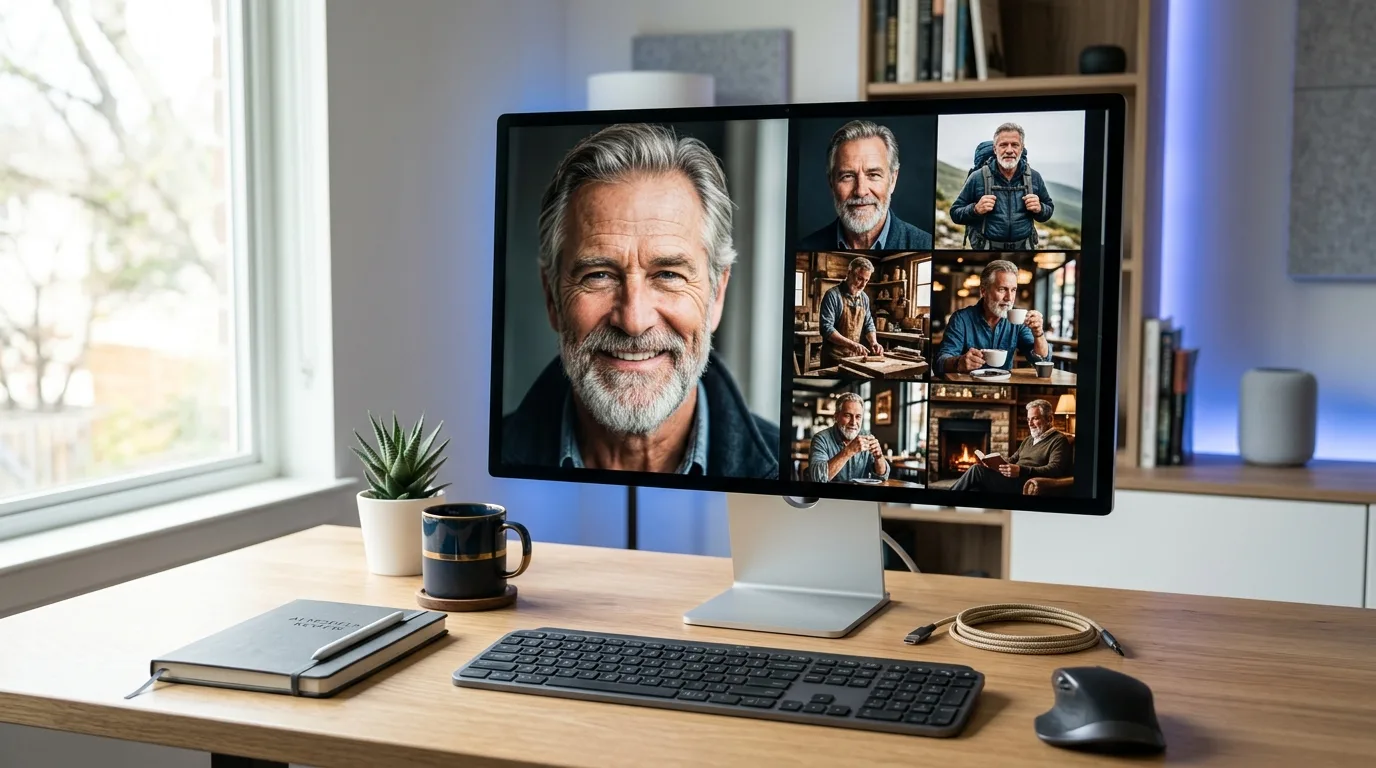
Across multiple independent tests, Nano Banana models — particularly the higher tiers — produce some of the most convincing photographic results available. Skin texture tends to look less “retouched,” hands are reliable, and environmental lighting often feels documentary rather than commercial-studio polished. When the brief is “make this look like a real photograph taken by a competent photographer,” Nano Banana frequently outperforms GPT Image 2.5, which can lean toward a slightly sharper, more editorial finish.
Multi-Reference Consistency
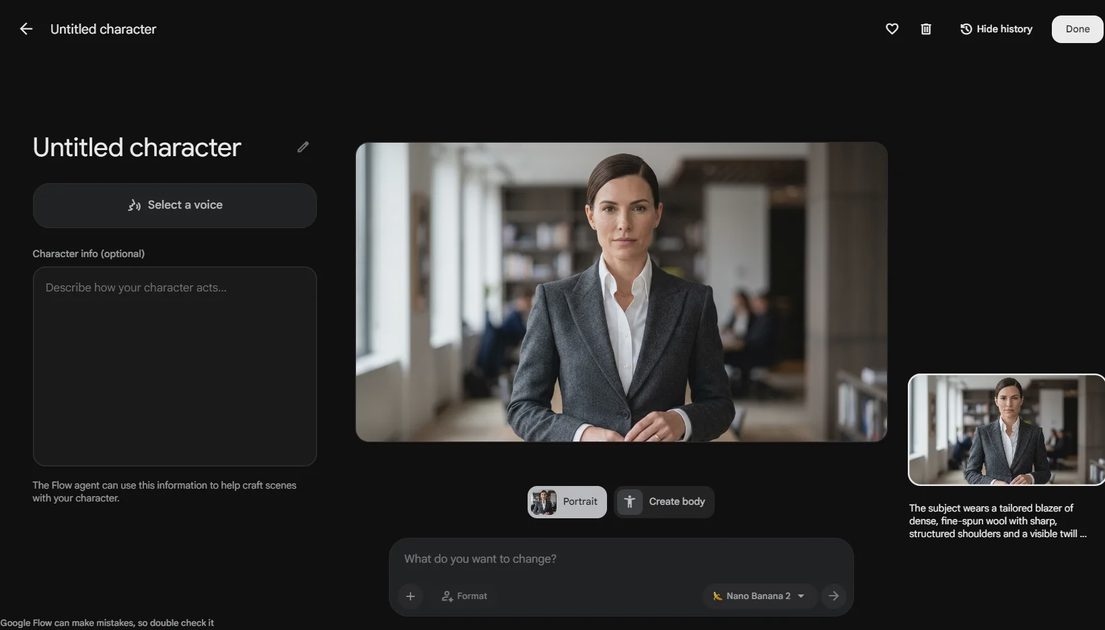
The ability to supply multiple reference images (up to nine in current interfaces) and maintain character, product, or style consistency across generations is a genuine practical advantage. Brand series, product colorways, character sheets, and sequential storytelling all benefit. GPT Image 2.5 is strong at single-reference preservation and multi-turn editing; Nano Banana’s multi-image support makes it especially useful when you need the same subject to appear in several distinct scenes without drift.
Speed and Iteration
Generation times are competitive — often in the 15–40 second range for standard 1K images depending on load and settings. Combined with the relatively low per-image cost, this encourages the kind of rapid iteration that makes AI image tools actually useful in a workday. You try an idea, look at it, adjust the prompt or references, and try again without feeling the meter running aggressively.
Value and Free Access
The free experience inside the Gemini app remains one of the strongest free tiers available. Paid API pricing for Nano Banana 2.1 sits near the bottom of the top-tier pack. For teams that generate hundreds or thousands of images, the unit economics are hard to ignore. Many production pipelines use Nano Banana for volume and drafting, then move only the final candidates to a higher-cost specialist model when needed.
Where It Is Less Dominant
Complex Text Layout
Text rendering has improved significantly, and simple headlines or short labels are usually reliable. Dense multi-line layouts, precise typography, or tightly constrained poster designs still favor GPT Image 2.5 or Ideogram. If the image lives or dies by perfect text, start elsewhere or plan a post-processing step.
Distinctive Artistic Style
Nano Banana is competent across many styles but rarely produces the instantly recognizable aesthetic signature that Midjourney V8.2 still delivers. When the brief is “make it look like a Midjourney image” or when pure visual language is the primary goal, most teams still reach for Midjourney first.
Occasional Over-Editing
In multi-turn or multi-reference workflows the model can sometimes over-apply changes or reinterpret background elements more aggressively than expected. Explicit constraints in the prompt (“change only X, leave Y and Z completely unchanged”) help, but the behavior is less surgically precise than the best GPT Image 2.5 Sunburst edits in some cases.
Pricing Reality Check
Approximate Gemini API pricing (late 2026, standard tier):
Nano Banana 2.1 — 1K ≈ $0.034 · 2K ≈ $0.050 · 4K ≈ $0.113
Nano Banana Pro — 1K/2K ≈ $0.134 · 4K ≈ $0.24
Batch endpoints roughly halve these rates
Free generation remains available inside the Gemini consumer app with daily limits. There is no free API tier.
For high-volume work the difference versus GPT Image 2.5 at higher quality settings is substantial. Teams that previously felt locked into a single expensive model often find that routing the majority of volume through Nano Banana 2.1 and only the highest-stakes assets through a premium model improves both cost and throughput.
Practical Workflow Recommendations
Use Nano Banana as Primary When
Photorealism and natural lighting are the priority
You need strong multi-reference or character/product consistency
Volume is high and unit cost matters
You want a capable free or low-cost starting point
You are iterating rapidly on lifestyle, product, or documentary-style imagery
Reach for Another Model When
Complex, multi-line, or precisely placed text is central → GPT Image 2.5 or Ideogram
Distinctive artistic style or mood is the main goal → Midjourney V8.2
Maximum multi-turn editing precision on a single high-value asset → GPT Image 2.5 Sunburst
Native vector or brand-system consistency → Recraft
In practice the strongest setups keep Nano Banana as the high-volume, high-consistency workhorse and maintain access to one or two specialists for the jobs it does not own. Our detailed look at GPT Image 2.5 covers the complementary strengths on the text and complex-instruction side.
Prompting and Reference Tips
Nano Banana responds well to clear, concrete language and benefits from good reference images. Neutral lighting and a clearly isolated subject in the reference usually produce better consistency than heavily stylized or cropped source photos. When using multiple references, order and relative importance can matter — test the sequence if results feel inconsistent.
For editing, state both the desired change and the elements that must remain untouched. The model is capable of localized changes, but explicit constraints reduce unwanted reinterpretation of backgrounds or secondary objects. Web-search grounding (where available) can improve factual accuracy for real-world places, products, or current events, though generated facts should still be verified.
Bottom Line
Google’s Nano Banana series is the most complete “everyday high-quality” image solution available in late 2026. It combines competitive photorealism, excellent multi-reference consistency, useful free access, and some of the best unit economics among models that can actually ship professional work. It does not win every category — text layout and pure artistic signature still belong to specialists — but for the majority of real briefs it is either the best choice or a very strong default.
If you are building a practical toolkit rather than chasing the single highest Arena score, Nano Banana 2.1 deserves a permanent place in the rotation. Pair it with GPT Image 2.5 for text-heavy or highly constrained work and Midjourney when aesthetic direction is the priority, and the overall system becomes both high-quality and cost-effective.
Explore the Full Cluster
Deep dives, real-project notes, and practical prompt systems for every major model in the 2026 ranking.
GPT Image 2.5 Deep Dive: How Good Is OpenAI’s Current Image Model in Real Use?
Midjourney V8.2 After Months of Daily Use: Still the Style King?
Grok Imagine Image 2.0: Cinematic Results and Where It Actually Shines
Ideogram 4.x for Text-Heavy Images: Posters, Logos, and Layouts
Seedream 5 in Practice: Commercial and Design Work Outside the Usual Suspects
Recraft for Brand Work: Vectors, Consistency, and Design Systems
Prompts That Actually Work Across GPT Image, Nano Banana, Midjourney & FLUX
What I Learned Running These Models for Real Projects All Year
For AI tool features, rules and availability, refer to their official sites.

Leave your thoughts here, too.