Key Takeaways
Black Forest Labs’ FLUX family remains one of the strongest options for photorealism, spatial accuracy, and layout control in late 2026. FLUX 3 Image is the current closed flagship; FLUX 3 Image Klein is the leading open-weights release.
FLUX 3 Image supports generation and editing in one model, up to 10 reference images, bounding-box layout control, and resolutions up to 4K. It frequently outperforms earlier FLUX.2 [pro] on text and precise edits.
FLUX 3 Image Klein (5.6B, open weights) delivers excellent quality at a fraction of the closed-model cost and can run locally. Free commercial use is allowed for individuals and companies under $5M annual revenue under the Kommunity License.
API pricing is resolution-based: FLUX 3 Image starts around $0.04–0.05 for 1K and rises steeply to ~$0.60 at 4K. Klein API access is far cheaper (from ~$0.009 at 1K).
Black Forest Labs has spent the last two years turning FLUX into the open-ecosystem counterpart to the major closed models. By late 2026 the family includes a closed flagship (FLUX 3 Image), a capable open release (FLUX 3 Image Klein), earlier FLUX.2 variants that remain useful, and video models. The common thread is strong photorealism, reliable spatial control, and — uniquely among the current top tier — practical open weights for self-hosting and private workflows.
This review focuses on the image models that matter for production use: FLUX 3 Image, FLUX 3 Image Klein, and the still-relevant FLUX.2 lineup. For the broader competitive context, see our ranking of the best AI image generators of 2026.
The Current FLUX Image Lineup
Model | Type | Best For | Approx. 1K Cost | Open Weights? |
|---|---|---|---|---|
FLUX 3 Image | Closed flagship | Maximum quality generation + editing | ~$0.048 | No |
FLUX 3 Image Klein | Open / API | Local, private, cost-efficient work | ~$0.009 (API) | Yes (5.6B) |
FLUX.2 [pro] | Closed | Production workhorse (still competitive) | Varies by host | No |
FLUX.2 [klein] 4B | Open | Simplest commercial open license (Apache 2.0) | Self-host / low API | Yes |
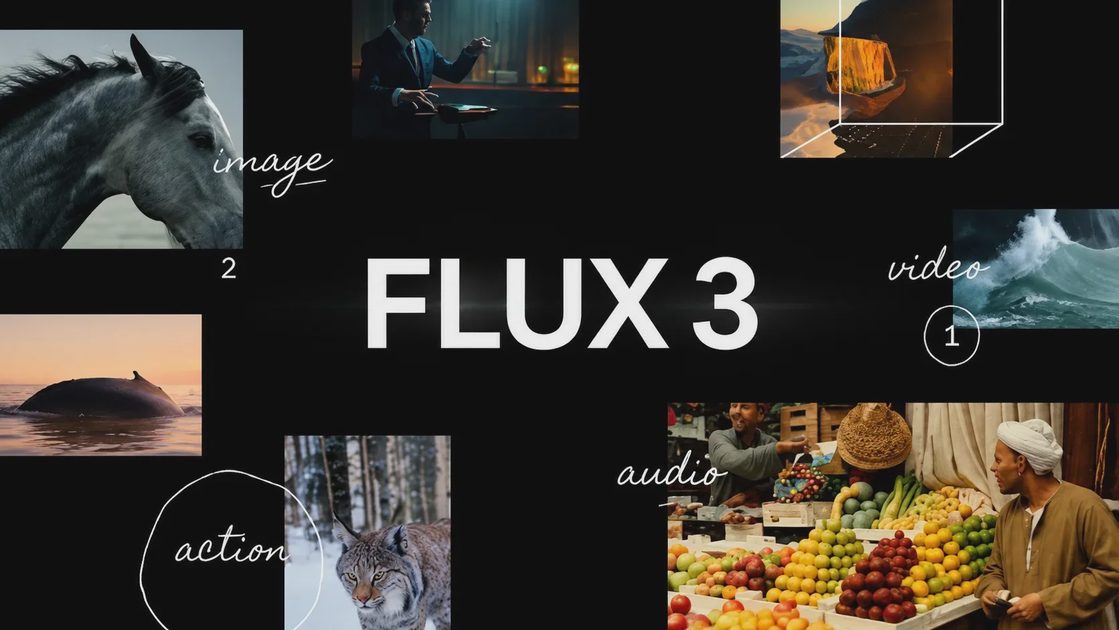
FLUX 3 Image (released October 1, 2026) is the current closed high-end model. It unifies generation and editing, accepts up to 10 references, supports bounding-box control for layout and targeted edits, and goes up to 4K. Independent same-prompt tests against FLUX.2 [pro] show it winning the majority of comparisons, especially on text reliability and label-preserving edits.
FLUX 3 Image Klein (October 15, 2026) is the open-weights counterpart. At 5.6B parameters it is practical to run on consumer or prosumer hardware (INT8 builds fit in 8 GB VRAM). Black Forest Labs’ internal evaluations place it ahead of other leading open models and competitive with several closed ones. The Kommunity License allows free commercial use for individuals and companies under $5 million in annual revenue.
Where FLUX Excels
Photorealism and Spatial Accuracy
FLUX models have long been among the strongest for photoreal detail, anatomy, and the correct spatial relationships between objects. Hands, product proportions, reflections, and complex multi-object scenes are handled more reliably than many competitors. When the brief requires “this should look like a real photograph of a real product in a real space,” FLUX remains a top-tier choice alongside the best Nano Banana outputs.
Layout Control and Bounding Boxes
FLUX 3 Image’s support for bounding-box layout and editing is a practical differentiator. Being able to specify where elements should sit (or which region to edit) reduces the trial-and-error that pure text prompts still require. This is especially useful for product mockups, packaging concepts, and any work where composition is non-negotiable.
Multi-Reference Composition
Up to 10 reference images give strong control over character, product, and style consistency. Combined with the editing capabilities, this makes FLUX effective for series work and iterative refinement without constantly regenerating from scratch.
Open Weights and Private Pipelines
This is the category where FLUX is still unmatched among models that can compete at the top of quality rankings. FLUX 3 Image Klein and the earlier FLUX.2 klein variants let teams run generation and editing on their own hardware, keep data private, and avoid per-image API costs at scale. For regulated industries, high-volume internal tools, or cost-sensitive production, this is often decisive.
Where It Is Less Dominant
Dense Text and Typography
Text rendering has improved with FLUX 3, and short labels or simple headlines are often usable. Dense multi-line layouts, precise hierarchy, and complex poster-style typography still trail GPT Image 2.5 and Ideogram. If the image lives or dies by perfect text, start with those models or plan a post-processing step.
Pure Aesthetic Signature
FLUX is excellent at photoreal and controlled stylization, but it does not carry the same instantly recognizable “taste” signature that Midjourney V8.2 still delivers for many creative briefs. When the primary goal is distinctive visual identity rather than accuracy or control, Midjourney remains the stronger first choice.
4K Cost on the Closed API
FLUX 3 Image pricing scales steeply with resolution. A 4K image can cost roughly 12× a 1K image on the official API. For high-resolution final assets this is worth budgeting carefully; many teams draft at 1K or 2K and only push to 4K for selected finals, or use the far cheaper Klein path when quality is sufficient.
Pricing Snapshot
Approximate Black Forest Labs API pricing (late 2026):
FLUX 3 Image — 768px ≈ $0.041 · 1K ≈ $0.048 · 2K ≈ $0.100 · 4K ≈ $0.607
FLUX 3 Image Klein — 1K ≈ $0.009 · 2K ≈ $0.014 · 4K ≈ $0.036
Self-hosting Klein removes the per-image cost entirely (hardware and electricity only). Third-party hosts may offer different rates.
The gap between the closed flagship and the open Klein model is large enough that many production pipelines use Klein for volume and internal work, reserving FLUX 3 Image for the highest-stakes assets that need the extra quality headroom.
Practical Recommendations
Choose FLUX 3 Image when
You need maximum photoreal quality and precise layout control via the API
Multi-reference composition and targeted editing are central to the workflow
You are willing to pay for the closed model’s ceiling on critical final assets
Choose FLUX 3 Image Klein (or earlier open variants) when
You want to self-host or keep generation fully private
Volume is high and unit cost matters
Your organization is under the $5M revenue threshold for free commercial use under the Kommunity License (or you have an appropriate paid license)
You need a strong open model that still competes with closed alternatives on photorealism and control
Reach for another model when
Complex, multi-line, or precisely placed text is the priority → GPT Image 2.5 or Ideogram
Distinctive artistic style and mood are the main goals → Midjourney V8.2
Maximum free-tier convenience or conversational editing inside a chat interface → Nano Banana / Gemini or GPT Image in ChatGPT
Bottom Line
FLUX remains the photorealism and control benchmark in the open and semi-open tier, and FLUX 3 Image keeps the family competitive with the best closed models on quality. The real strategic advantage is the existence of strong open weights (especially FLUX 3 Image Klein) that let teams run serious generation privately and economically.
If your work prioritizes photographic accuracy, spatial precision, multi-reference consistency, or the ability to self-host, FLUX belongs in the permanent toolkit. Pair it with GPT Image 2.5 for text-heavy or highly constrained briefs and Midjourney when pure aesthetic direction is the goal, and the overall system covers the full range of professional image needs without single-vendor lock-in.
Explore the Full Cluster
Deep dives, real-project notes, and practical prompt systems for every major model in the 2026 ranking.
GPT Image 2.5 Deep Dive: How Good Is OpenAI’s Current Image Model in Real Use?
Google’s Nano Banana Series Tested: Speed, Consistency, and Value in 2026
Midjourney V8.2 After Months of Daily Use: Still the Style King?
Grok Imagine Image 2.0: Cinematic Results and Where It Actually Shines
Ideogram 4.x for Text-Heavy Images: Posters, Logos, and Layouts
Seedream 5 in Practice: Commercial and Design Work Outside the Usual Suspects
Recraft for Brand Work: Vectors, Consistency, and Design Systems
Prompts That Actually Work Across GPT Image, Nano Banana, Midjourney & FLUX
What I Learned Running These Models for Real Projects All Year
For AI tool features, rules and availability, refer to their official sites.


Leave your thoughts here, too.