Key Takeaways
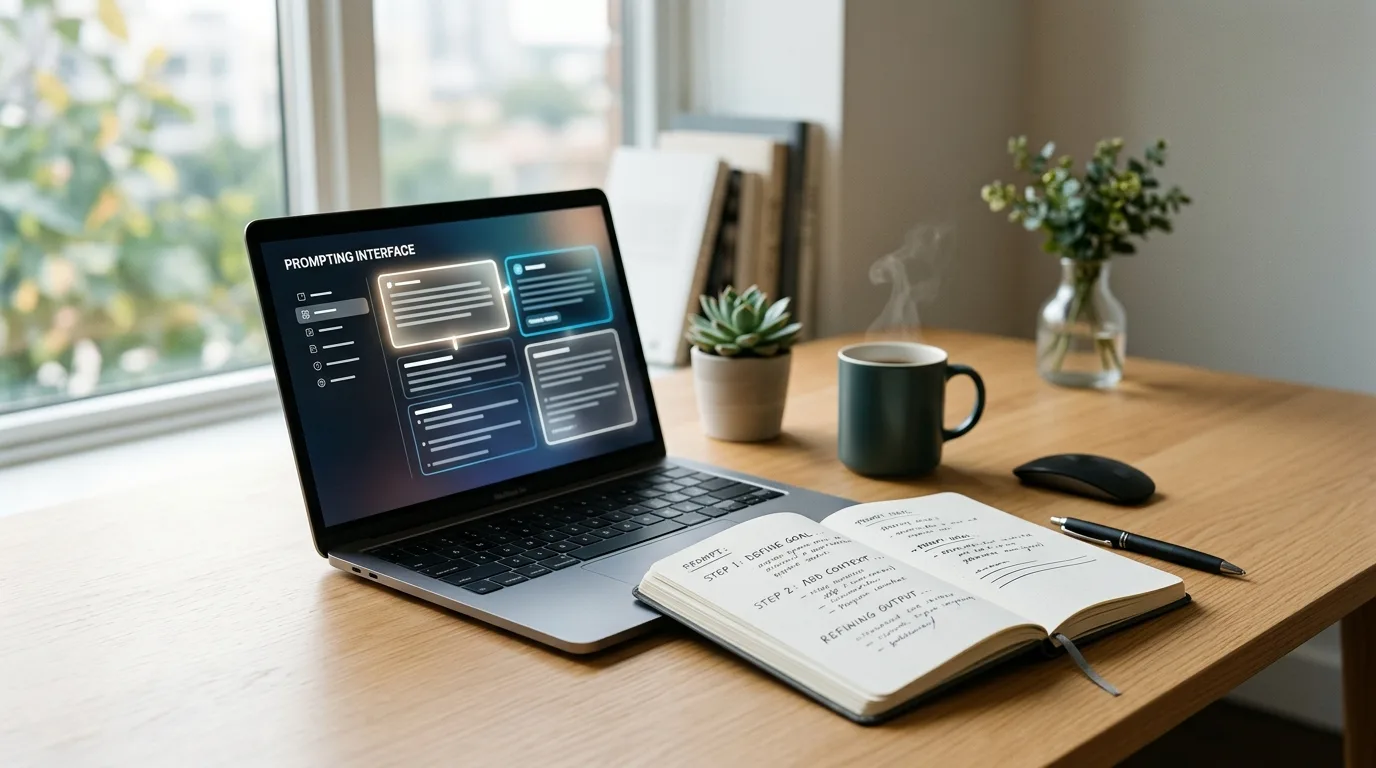
Most “magic prompts” fail when moved between models. What survives is structure: subject → setting → lighting → style/camera → constraints → text (if any).
GPT Image 2.5 rewards explicit multi-constraint lists and clear hierarchy. Nano Banana responds well to natural, conversational descriptions with strong photographic language. Midjourney prefers shorter, evocative direction and benefits from its own parameters. FLUX likes precise spatial and material detail.
Put exact text in quotes. Specify hierarchy and placement when text matters. Never assume the model will invent correct commercial copy.
Prompting in 2026 is less about secret keywords and more about clear structure. The same raw idea can produce very different results on GPT Image 2.5, Nano Banana, Midjourney V8.2, and FLUX because each model was trained and tuned differently. The patterns below are designed to travel reasonably well across those four while still letting you lean into each model’s strengths.
For model-specific behavior and when to choose each tool, see the individual deep dives in this cluster and the overall ranking of the best AI image generators of 2026.

A Simple Structure That Travels
Use this order most of the time:
Subject — what is in the frame, with concrete nouns
Setting / context — where it lives
Lighting — direction, quality, time of day or practical sources
Camera / style — lens feel, medium, aesthetic direction
Constraints — what must be true (and sometimes what must not)
Text — exact wording in quotes, plus placement if needed
This is not rigid dogma. It is a reliable skeleton that keeps prompts from becoming pure vibe lists or pure technical dumps.
Product / Commercial Still Life
Goal: clean product shot that works for ecommerce or campaign concepts.
A matte black ceramic pour-over coffee dripper centered on a light oak table, soft morning window light from the left, gentle shadow under the base, shallow depth of field, 85mm lens look, clean minimal background, no extra props, photoreal product photography
Why it works across models: Concrete subject and material, clear light direction, camera language, and a hard constraint (“no extra props”). GPT Image and FLUX usually respect the isolation; Nano Banana tends to deliver natural light; Midjourney may add slight aesthetic polish — acceptable for concept work.
Variant for stronger commercial control:
Studio product shot of a matte black ceramic pour-over coffee dripper, three-quarter view, soft diffused key light from upper left, subtle fill, seamless light gray background, centered composition, sharp focus on the dripper, no reflections of people or logos, commercial product photography
Portrait with Controlled Lighting
Portrait of a woman in her early 30s, natural skin texture, soft Rembrandt lighting from the right, dark muted background, 85mm lens, shallow depth of field, calm expression looking slightly off camera, photoreal, no heavy makeup, no beauty filter look
Key controls that travel: age range, light pattern name or direction, lens feel, and an explicit rejection of over-smoothed skin. Midjourney may still lean more stylized; add “documentary portrait” or “naturalistic” if you need to pull it back. Nano Banana and FLUX often need less correction here.
Text-Heavy Poster / Layout
Text is still the most fragile part of cross-model prompting. Always put the exact words in quotes and describe hierarchy.
A bold vertical poster design, large headline text "LATE SUMMER MARKET" centered in the upper third, smaller subhead "Saturday 10–4 · Riverside Park" below it, minimal botanical illustration of dried grasses in the lower half, warm paper texture background, clean modern typography, high contrast, no extra text
On GPT Image 2.5 and Ideogram this structure is usually reliable. On Midjourney and FLUX you should expect more cleanup or route the final text-heavy version to a text specialist. Keep the text block short and hierarchical.
Cinematic Environment
Wide shot of an empty coastal road at dusk, low sun behind distant hills, long shadows across the asphalt, slight haze, cool blue sky with warm residual light on the horizon, cinematic still, anamorphic feel, quiet and atmospheric, no cars, no people
Atmosphere prompts travel well when they stay concrete about light and weather. Midjourney and Grok Imagine often excel here; GPT Image and Nano Banana remain strong if you keep the description photographic rather than purely poetic.
Model-Specific Adjustments
GPT Image 2.5
Be explicit. Stack constraints. Use clear lists when multiple requirements must be true at once. It handles longer, more instructional prompts better than most. If something is critical, say so directly (“the label text must read exactly…”).
Nano Banana
Natural language and photographic vocabulary work well. Describe the scene as you would to a photographer. It is strong with multi-reference when available — use that for consistency instead of overloading the text prompt.
Midjourney V8.2
Shorter is often better. Lean on evocative direction and let the model’s aesthetic judgment fill in. Use its parameters (--ar, --stylize, --v, Personalization) rather than trying to force every detail in prose. For text, keep expectations modest or move the job.
FLUX
Reward spatial and material precision. Name materials, relative positions, and lighting direction clearly. Bounding-box or regional controls (where available) are more effective than hoping the model invents perfect layout from text alone.
Practical Habits That Survive Real Projects
Lock a structure, vary one variable. Change lighting or background while keeping subject and camera language fixed. You learn faster and waste fewer generations.
Quote all critical text. Never rely on the model to invent correct brand or product wording.
Separate exploration from finalization. Draft on the model that is fastest or cheapest for the direction, then refine critical assets on the model that is strongest for that specific need (text, photoreal, style).
Keep a small personal library. A dozen well-tested structures for product, portrait, poster, and environment cover most recurring work. Update them when a new model version shifts behavior.
Accept model personality. Fighting Midjourney into pure documentary realism or forcing FLUX into pure Midjourney-style mood usually costs more generations than routing the job correctly.
One rule that still holds: If the prompt is longer than a short paragraph and full of conflicting adjectives, simplify. Clarity beats density on every current major model.
Bottom Line
Cross-model prompting in 2026 is about reusable structure and selective adaptation, not about finding one magic sentence. Subject, setting, light, camera, constraints, and quoted text — in that rough order — give you a base that works on GPT Image 2.5, Nano Banana, Midjourney, and FLUX with only modest tuning.
Build a small set of patterns for the jobs you actually repeat. Route text-heavy work and pure style work to the specialists. Treat everything else as a structured conversation with the model rather than a search for secret keywords. That approach survives model updates and keeps the work moving.
Explore the Full Cluster
Deep dives, real-project notes, and practical prompt systems for every major model in the 2026 ranking.
GPT Image 2.5 Deep Dive: How Good Is OpenAI’s Current Image Model in Real Use?
Google’s Nano Banana Series Tested: Speed, Consistency, and Value in 2026
Midjourney V8.2 After Months of Daily Use: Still the Style King?
Grok Imagine Image 2.0: Cinematic Results and Where It Actually Shines
Ideogram 4.x for Text-Heavy Images: Posters, Logos, and Layouts
Seedream 5 in Practice: Commercial and Design Work Outside the Usual Suspects
Recraft for Brand Work: Vectors, Consistency, and Design Systems
What I Learned Running These Models for Real Projects All Year
For AI tool features, rules and availability, refer to their official sites.
Leave your thoughts here, too.