
Key Takeaways
Most everyday AI use cases (writing, research, summarizing, light analysis) do not require the newest frontier models.
The biggest performance gap for regular users comes from unclear goals and weak prompts, not from model version.
Usage data shows the majority of people still apply AI to only a few simple tasks and remain in early or experimental stages.
Chasing the latest model often creates more anxiety and distraction than actual improvement for ordinary work.
The highest-leverage skill is learning to state what you want clearly before you touch any model.
Every few months a new model drops. The headlines follow the same script: smarter, faster, more capable, closer to something that feels almost human. People scramble to try it. Some pay for the premium tier the same day. Others feel quietly behind if they haven’t switched yet.
Here’s the uncomfortable observation after watching more than a hundred regular users work with AI over the past couple of years: most of them never needed the upgrade.
Not because the new models aren’t better. They are, in specific ways and on specific benchmarks. But the tasks most people actually do with AI—rewriting an email, summarizing a document, brainstorming a few options, cleaning up a messy paragraph, asking for an explanation—sit well within the capability of models that are already a generation or two old. The bottleneck almost never sits in the model. It sits in the person trying to use it.

What people actually use AI for
Look at how people really spend their time with these tools. Across multiple 2026 surveys, the dominant uses remain practical and relatively straightforward.
Research and learning consistently rank near the top. Writing and editing come next. Personal productivity tasks follow close behind. In workplace data, writing is frequently the single most common application, often cited by roughly half to two-thirds of AI users at work. Coding, complex analysis, and advanced agent-style work exist, but they are minority activities for most people outside specialized roles.
One large benchmark of professionals in 2026 found that a clear majority were still in early stages—exploring tools or testing a few of them—rather than running AI as a core part of daily operations. Another dataset showed that a substantial share of users apply AI to only one or two quick tasks. The pattern is not deep, sophisticated deployment. It is light, repeated, practical help.
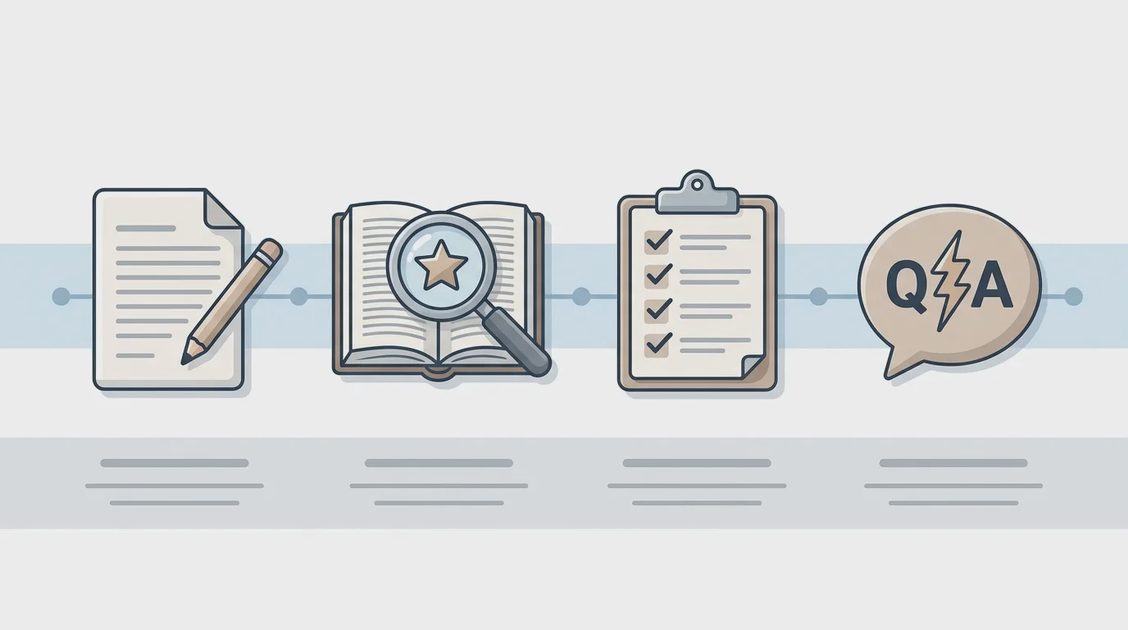
When the jobs people give AI are mostly “make this clearer,” “give me three options,” “summarize this,” or “help me think through this decision,” the newest model is rarely the deciding factor. A solid mid-tier or previous-generation model already handles these requests competently. The difference in output quality is often smaller than the difference created by a clearer request.
The real gap is upstream of the model
Watch someone struggle with AI and you usually see the same sequence. They open the chat. They type a vague request. The model returns something generic or slightly off. They tweak a word or two. Still not right. They switch models or upgrade the subscription, hoping the next version will finally “get it.”
The model was never the main problem. The request was under-specified.
Most people have never been forced to articulate exactly what they want before they ask for it. In normal conversation we rely on shared context, tone, and the other person’s ability to fill in gaps. AI does not fill gaps the same way. It takes what you give it and runs. If the goal is fuzzy, the constraints are missing, and the desired format is undefined, the output will reflect that fuzziness—no matter how powerful the model is.
This is why prompt quality keeps showing up as a major driver of results. Studies that isolate the effect of better prompting versus model upgrades often find that clearer instructions account for a large share of the improvement people experience. In some controlled settings, prompt improvements have contributed nearly as much as moving to a stronger model. The practical implication is straightforward: for the kinds of work most people do, getting better at stating the goal usually beats switching to the newest release.

Why the newest model feels necessary (even when it isn’t)
There are a few reasons the upgrade cycle feels so urgent.
First, the marketing and media coverage are built around capability leaps. Benchmarks, demos, and launch videos highlight the hardest tasks the model can now handle. Those tasks are real, but they are not the tasks most users face on a Tuesday afternoon.
Second, social proof is loud. When peers post about the new model, it creates a low-level FOMO. Staying on an older version can feel like falling behind even if your actual results have not suffered.
Third, the interface itself encourages model switching. Many products make the newest model the default or the most visible option. The path of least resistance is to use whatever is presented as current.
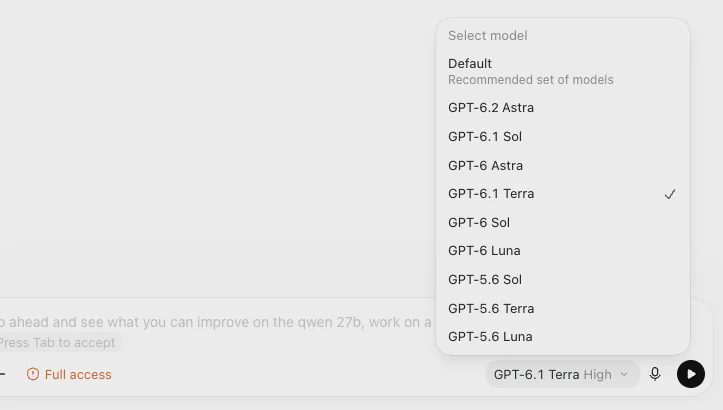
None of these forces are malicious. They just systematically overstate how much the average person’s daily work depends on frontier performance.
When the newer model actually matters
This is not an argument that model progress is irrelevant. There are clear situations where the latest systems pull ahead in ways that matter:
Complex multi-step reasoning or long-horizon planning
High-stakes coding and technical work where small errors are expensive
Tasks that require strong consistency across long documents or many iterations
Specialized domains where the newest training data or capabilities close a real gap
If your work lives in one of those zones, upgrading can be rational. For everyone else, the returns diminish quickly. A large portion of writing, research, summarization, and light decision support still works well with capable models that are no longer the newest.
Even among power users, many keep older or faster models in rotation for routine jobs. The newest model is treated as a specialist tool, not the default for every message.

The higher-leverage skill
If the model is not the primary bottleneck, what is?
The ability to turn a fuzzy intention into a clear request.
That sounds simple. In practice it is the skill most people skip. They jump straight into the chat and hope the model will figure out what they meant. When it doesn’t, they blame the tool.
A more useful sequence looks like this:
Decide what “done” actually looks like. What would a good answer contain? What would make it unusable?
State the goal in plain language before you open the AI.
Add the constraints that matter: length, tone, audience, format, things to avoid.
Give just enough context for the model to orient itself. Not your entire life story—just the relevant background.
Then write the prompt.

People who do this consistently get better results from whatever model they happen to be using. People who skip it keep chasing newer versions and still feel the output is “off.”
This is also why so many expensive AI courses under-deliver for ordinary users. They teach techniques, templates, and the latest features. They rarely force the harder, quieter work of clarifying the request itself.
What this means in practice
You do not need to reject new models. You do need to stop treating them as the main lever.
A more realistic operating posture looks like this:
Default to a capable, stable model for routine work.
Upgrade when you hit a concrete limitation you can name, not when a launch video makes you feel behind.
Invest time in getting clearer about what you want before you type.
Treat prompting as a thinking tool, not a magic spell. The quality of the question still determines most of the quality of the answer.
The people who get the most consistent value from AI are rarely the ones with the newest subscription. They are the ones who have learned to describe the job precisely enough that almost any decent model can execute it.

The quieter truth
Model progress will continue. Some of it will be impressive. Some of it will matter a great deal for certain professions and certain problems. For the large majority of daily use cases, however, the limiting factor has already shifted.
It is no longer primarily “Is the model smart enough?”
It is “Have I figured out what I actually need, and can I say it clearly?”
That is a less glamorous problem than chasing the next release. It is also the one that most people can improve today, with whatever tools they already have.
Ninety percent of people do not need the latest AI model. They need to get better at knowing—and stating—what they want from the ones they already use.
More in this series
Why Most People Get More Anxious the More They Learn About AI
GPT-3.5 Is Already Enough for Most People. Here’s What I Learned Watching 100+ Regular Users
Four Core Rules for Turning Vague Ideas Into Prompts That Actually Work
How to Use AI for Decisions Without Just Asking It for the Answer
Popular AI Models in Late 2026: A Beginner-Friendly Overview
How to Use AI to Actually Learn Something Instead of Just Summarizing It
For AI tool features, rules and availability, refer to their official sites.



Leave your thoughts here, too.