Key Takeaways
Seedream 5.0 (ByteDance) is a capable all-rounder that sits just outside the absolute top tier but delivers strong commercial and design utility at competitive cost.
The lineup includes Pro (flagship, stronger on layouts and multilingual text), Lite (volume and speed), and Flash (cheapest/fastest drafts). Pro is the one most relevant for finished commercial work.
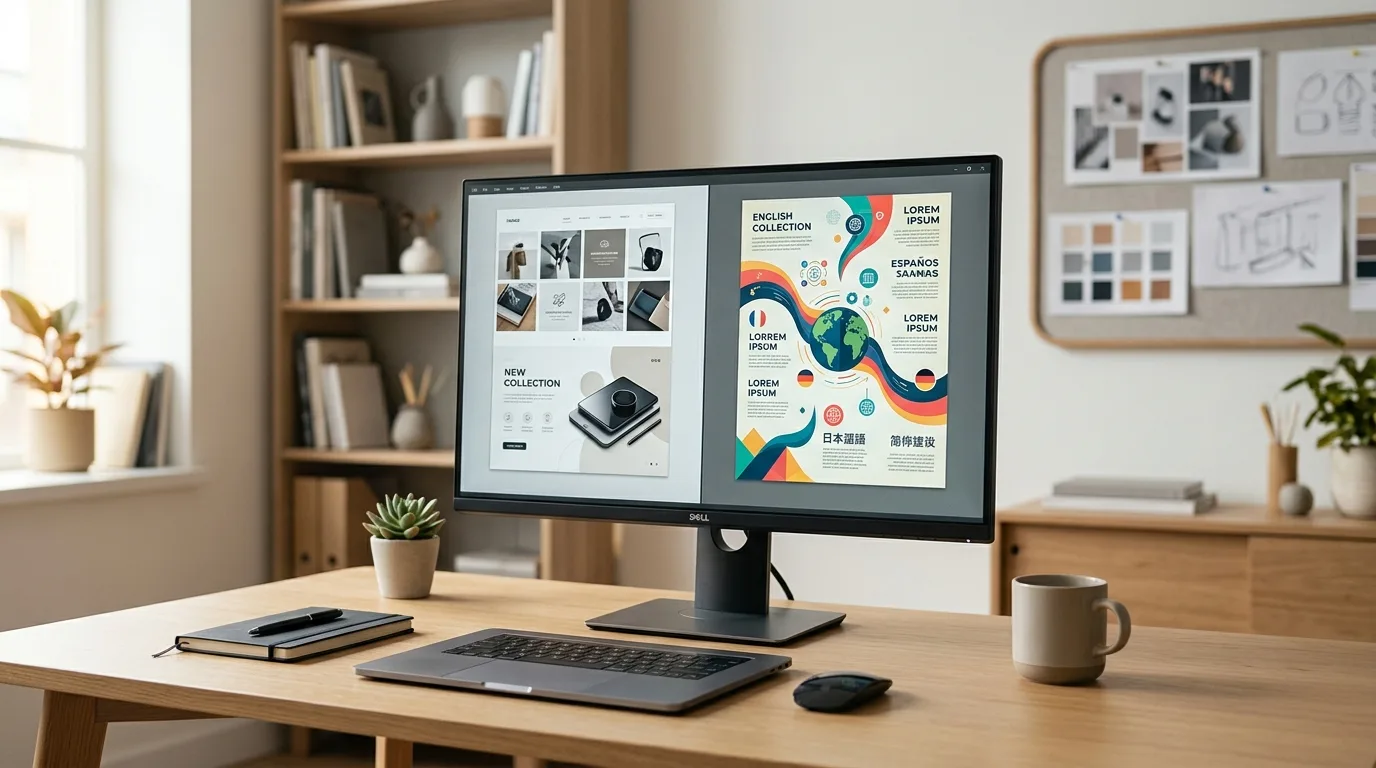
Multilingual text support (including right-to-left scripts) and dense layout handling are practical strengths for international and information-heavy design tasks.
Multi-reference support (up to 10 images) and regional editing controls make it useful for consistency and targeted changes in commercial series.
Pricing is attractive for volume: Lite and Flash undercut many closed models; Pro remains competitive for higher-quality output.
Most “best of” lists in 2026 are dominated by the same short roster: GPT Image 2.5, Nano Banana, Midjourney, FLUX, and a couple of specialists. Seedream 5.0 from ByteDance sits just outside that innermost circle — competitive enough to be useful, distinct enough in pricing and feature emphasis to earn a place in real commercial pipelines, and still under-discussed relative to its practical value.
This article looks at Seedream 5 in the context of commercial and design work rather than pure leaderboard chasing. For the broader ranking of the current field, see our comparison of the best AI image generators of 2026.
The Seedream 5 Lineup
Variant | Role | Approx. Cost / Image | Best For |
|---|---|---|---|
Seedream 5.0 Pro | Flagship | ~$0.045–0.09 (resolution dependent) | Layouts, multilingual text, finished commercial assets |
Seedream 5.0 Lite | Volume / speed | ~$0.035 | High-volume generation, drafts, 2K–4K output |
Seedream 5.0 Flash | Fastest / cheapest | ~$0.027 | Rapid prototyping, previews, quick iterations |
Pro is the version most relevant for work that needs to ship. It emphasizes design understanding, dense text and layouts, multilingual support (including right-to-left scripts), multi-reference composition, and regional editing controls. Lite and Flash trade some of that ceiling for speed and lower cost, making them practical for volume and exploration.
Where Seedream 5 Earns Its Place
Commercial and Design Layouts
Seedream 5.0 Pro is pitched explicitly at design work: turning concepts and dense information into professional layouts, handling typography across multiple languages, and supporting regional control (marking where elements should sit). In practice this makes it useful for infographics, packaging concepts, multilingual marketing assets, and information-heavy posters where general models sometimes struggle with structure.
Multilingual Text
Support for a broad set of languages, including right-to-left scripts and accented characters, is a practical advantage for teams working across markets. When the asset must contain correct non-English (or mixed-language) text, Seedream is worth testing alongside Ideogram and GPT Image 2.5 rather than defaulting only to the usual English-centric leaders.
Multi-Reference and Editing Controls
Up to 10 reference images and regional editing tools give reasonable consistency and targeted change capabilities. For commercial series — product colorways, character variations, campaign asset families — this is enough to be useful without matching the absolute best systems from Google or Black Forest Labs.
Cost Efficiency
Lite and Flash undercut many closed models on unit cost while still producing usable results for drafts and volume work. Pro remains competitive for higher-quality output. For teams that generate significant volume and do not need the absolute peak of Arena preference scores, the economics are attractive.
Where It Is Less Dominant
Pure Preference Rankings and Photoreal Peak
Seedream 5 does not currently sit at the top of independent blind-preference leaderboards. GPT Image 2.5, the best Nano Banana variants, and FLUX models more often win pure quality comparisons. If the only criterion is “highest average preference score,” Seedream is a secondary rather than primary choice.
Distinctive Artistic Signature
Midjourney still owns the strongest pure aesthetic point of view. Seedream is competent across styles but does not carry the same instantly recognizable visual identity. When the brief is about mood and distinctive style, Midjourney remains the stronger first tool.
Access and Ecosystem
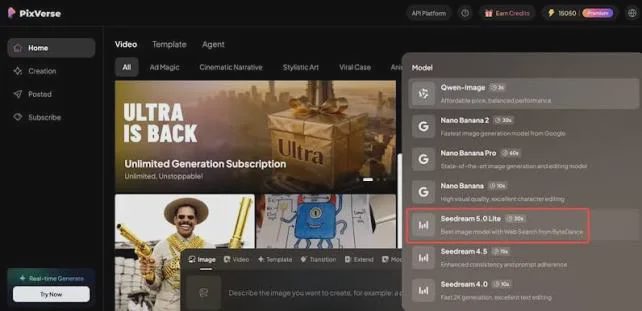
Seedream is primarily API- and platform-oriented (BytePlus, CapCut/Jianying ecosystem, various third-party hosts). There is less of a polished consumer chat experience comparable to ChatGPT or Gemini. Teams that prefer conversational iteration inside a familiar chat interface may find the workflow less seamless.
Pricing Reality
Approximate pricing via common hosts (late 2026):
Seedream 5.0 Flash — ~$0.027 per image
Seedream 5.0 Lite — ~$0.035 per image
Seedream 5.0 Pro — ~$0.045–0.09 depending on resolution and host
Exact rates vary by platform and region. Always check the current host pricing before budgeting high-volume work.
The value proposition is clearest for teams that need solid commercial quality at scale without paying top-tier closed-model rates for every generation. Draft on Flash or Lite, finish critical assets on Pro (or move only the final candidates to a higher-ranked specialist).
Practical Recommendations
Use Seedream 5 when
You need competitive commercial quality at attractive unit cost
Multilingual or dense-layout design work is part of the brief
Multi-reference consistency is useful but you do not need the absolute best system
You are building volume pipelines and want a capable alternative to the most expensive closed models
Reach for another model when
Maximum preference-ranking quality is required → GPT Image 2.5 or top Nano Banana / FLUX
Pure typography reliability on complex English (or design-system) text is the priority → Ideogram or GPT Image 2.5
Distinctive artistic style and mood dominate → Midjourney V8.2
You need the strongest free consumer experience or chat-native editing → Nano Banana in Gemini or GPT Image in ChatGPT
Bottom Line
Seedream 5 is the kind of model that rarely tops “best overall” lists but frequently earns a permanent seat in real production stacks. It offers solid commercial and design capability, meaningful multilingual and layout strengths, multi-reference support, and pricing that makes volume work practical. It does not replace the current leaders in pure quality or pure style, but it competes effectively as a cost-efficient, design-oriented alternative.
If your work involves international markets, information-heavy graphics, or simply a need for capable generation without top-tier per-image costs, Seedream 5 is worth testing alongside the more widely discussed models. In many commercial pipelines it ends up handling a larger share of the volume than its leaderboard position would suggest.
Explore the Full Cluster
Deep dives, real-project notes, and practical prompt systems for every major model in the 2026 ranking.
GPT Image 2.5 Deep Dive: How Good Is OpenAI’s Current Image Model in Real Use?
Google’s Nano Banana Series Tested: Speed, Consistency, and Value in 2026
Midjourney V8.2 After Months of Daily Use: Still the Style King?
Grok Imagine Image 2.0: Cinematic Results and Where It Actually Shines
Ideogram 4.x for Text-Heavy Images: Posters, Logos, and Layouts
Recraft for Brand Work: Vectors, Consistency, and Design Systems
Prompts That Actually Work Across GPT Image, Nano Banana, Midjourney & FLUX
What I Learned Running These Models for Real Projects All Year
For AI tool features, rules and availability, refer to their official sites.
Leave your thoughts here, too.