Key Takeaways
Jensen Huang stepped down as NVIDIA CEO after 33 years amid personal controversy; the stock sold off sharply as markets digested the news.
His most consequential decision was not a product launch but a multi-year, largely unprofitable commitment to CUDA — turning GPUs into a general-purpose parallel computing platform long before AI demand arrived.
NVIDIA’s current dominance rests as much on that long-horizon judgment and the developer ecosystem it created as on raw silicon.
Short-term operations and product roadmaps remain intact; the open question is whether the company can still make the next “nobody understands this yet” bet without its founder.
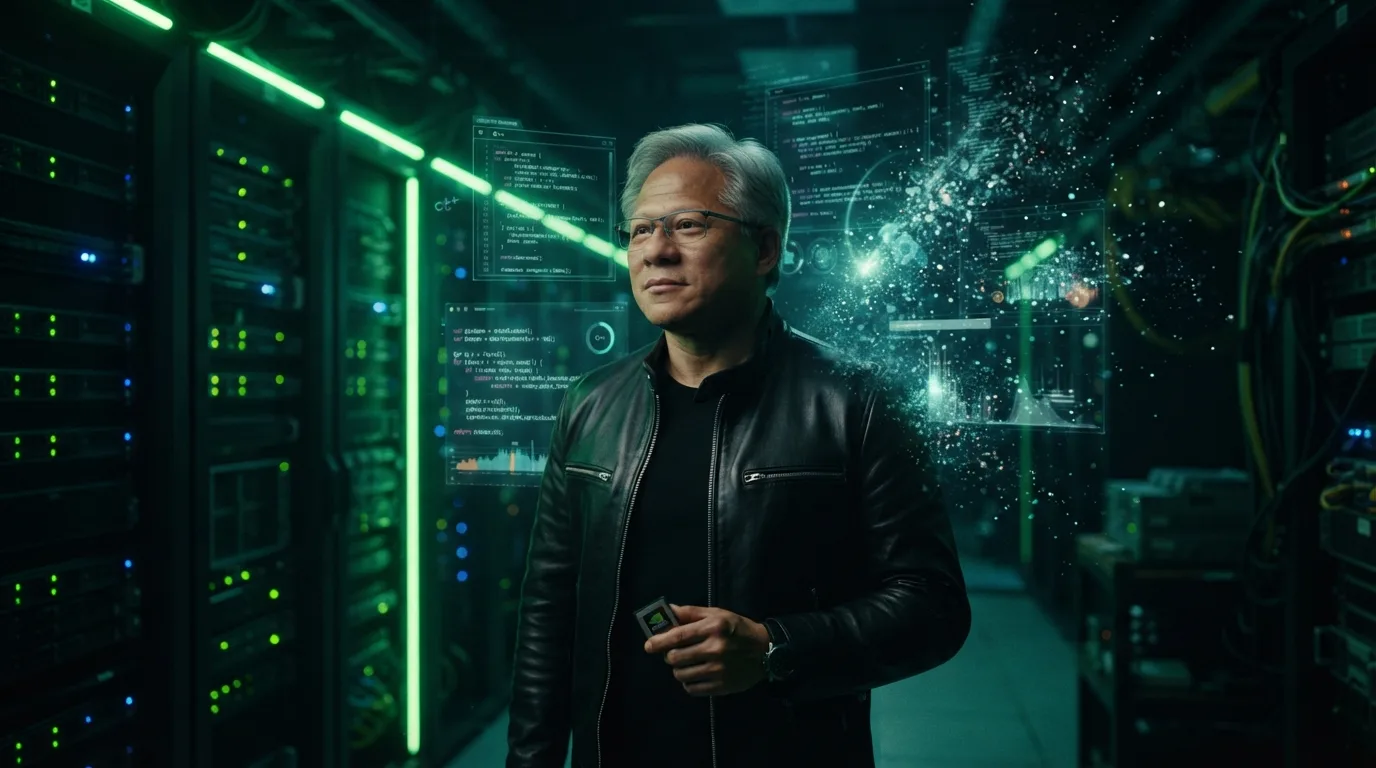
Jensen Huang has resigned. NVIDIA’s market value is getting hit hard. After more than three decades as the only CEO the company has ever known, the man who turned a graphics-chip startup into the indispensable engine of the artificial-intelligence boom is out.
The immediate reaction in the market was predictable and brutal: shares sold off, valuations compressed, and a wave of uncertainty washed over an industry that had come to treat Huang’s presence as a permanent feature of the landscape.
From Taiwan to a Kentucky reform school to Denny’s
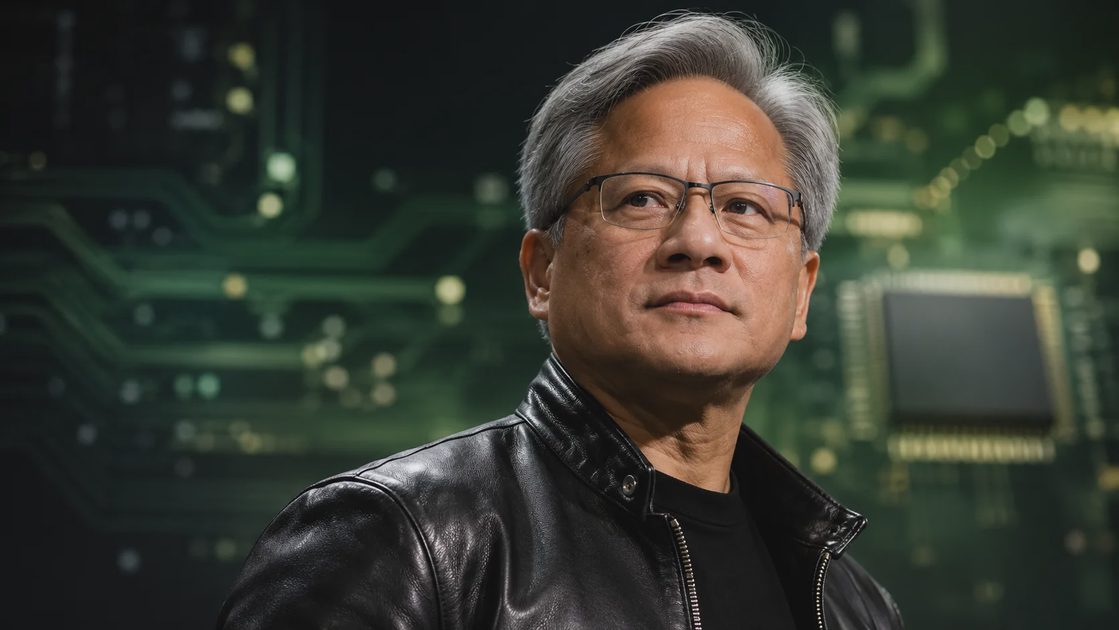
Jen-Hsun Huang was born on February 17, 1963, in Taiwan. His father was a chemical engineer; his mother taught school. When he was still a young child the family moved to Thailand. Around age nine, amid regional instability, he and his older brother were sent to the United States and enrolled at Oneida Baptist Institute in rural Kentucky — a boarding school that turned out to be closer to a reform institution than the prestigious academy their relatives had imagined. Huang has described cleaning toilets every day and learning to navigate a harsh environment far from home. The experience left a lasting imprint; he has repeatedly said those years taught him resilience more clearly than almost anything that followed.
His parents later joined the family in Oregon. Huang attended Aloha High School, excelled at table tennis (he once held a national junior ranking), and worked at a Denny’s restaurant washing dishes and waiting tables. He graduated early, enrolled at Oregon State University to study electrical engineering, and met his future wife, Lori Mills, as a lab partner. They married in 1985. He later completed a master’s degree in electrical engineering at Stanford while working full-time, first at AMD and then at LSI Logic, rising to a director-level role in chip design.
In April 1993, at age thirty, Huang co-founded NVIDIA with Chris Malachowsky and Curtis Priem.
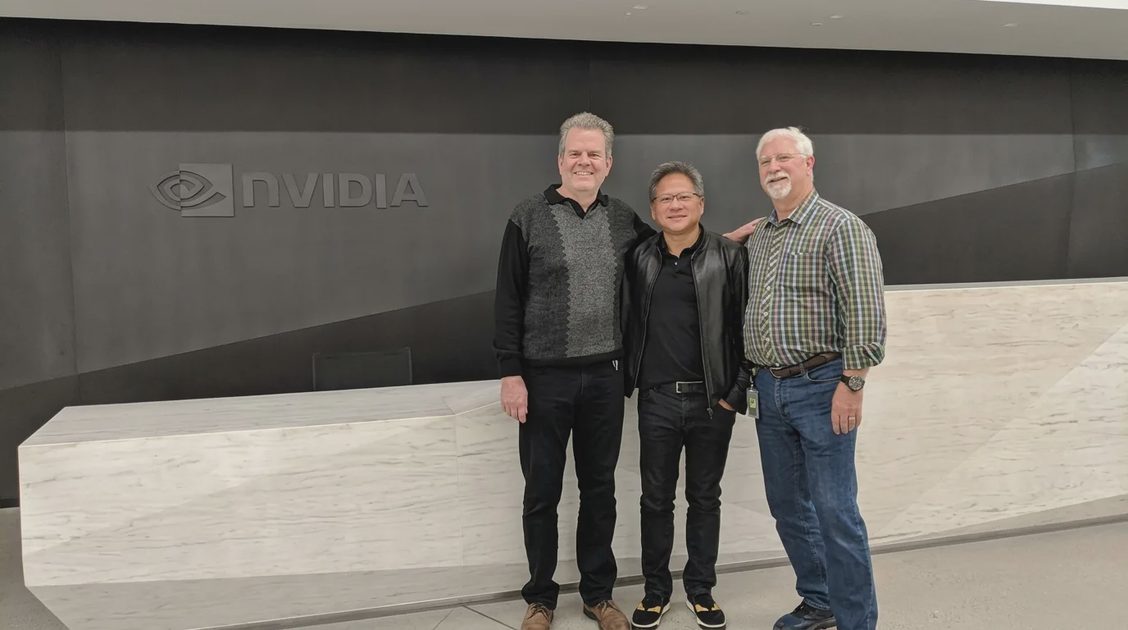
The three sketched the idea at a Denny’s in San Jose — the same chain where Huang had once earned a living as a teenager — with roughly $40,000 in seed capital. Huang became CEO from day one and never left the role until this week. The early years were precarious: the first product, the NV1, failed commercially; the company came close to running out of money. Survival hinged on the Riva 128 and a series of hard-fought design wins. NVIDIA went public in 1999. The rest of the story is better known — but the part that actually created today’s NVIDIA is less about any single product and more about a decision that looked irrational for years.
The CUDA bet nobody wanted to understand
In 2006 Huang began pushing the company toward CUDA, a software platform that would let developers treat the GPU as a general-purpose parallel computer rather than a specialized graphics engine.
At the time the industry consensus was straightforward: GPUs existed to render frames for games and professional visualization. Using them for scientific computing, linear algebra, or large-scale parallel workloads was, to most observers, a distraction.
Wall Street did not price in a multi-year investment in developer tools and academic outreach. Competitors largely ignored the idea. The payoff, if it ever came, was years away — and in the interim the company would have to spend heavily on compilers, libraries, documentation, and evangelism with almost no visible return.

That was the real risk. CUDA was not a feature; it was a commitment to build an entire computing platform and then wait for the world to need it. Most executives optimize for the next quarter or the next product cycle. Huang was betting on a shift that was more than a decade from becoming obvious.
He kept funding the effort year after year, defending it to the board, and expanding the ecosystem even when the financial case remained thin. When deep learning finally broke into the mainstream and large language models began consuming unprecedented amounts of compute, the industry discovered that the only mature, production-ready platform capable of running those workloads at scale was the one NVIDIA had been quietly assembling since the mid-2000s. The hardware was necessary; the software stack and the community of researchers and engineers already fluent in CUDA were the actual moat.
This is why many of us who have watched the company for a long time argue that NVIDIA’s durable advantage is only half technical. The other half is the combination of long-horizon judgment and the patience to endure years of skepticism. Building a developer community, binding the company tightly to academic research, and treating the GPU as a programmable platform rather than a fixed-function accelerator required someone who could see past the current product cycle and then stay the course when the market refused to reward the decision. Those qualities traveled with the person, not with the org chart.
What happens when the founder leaves
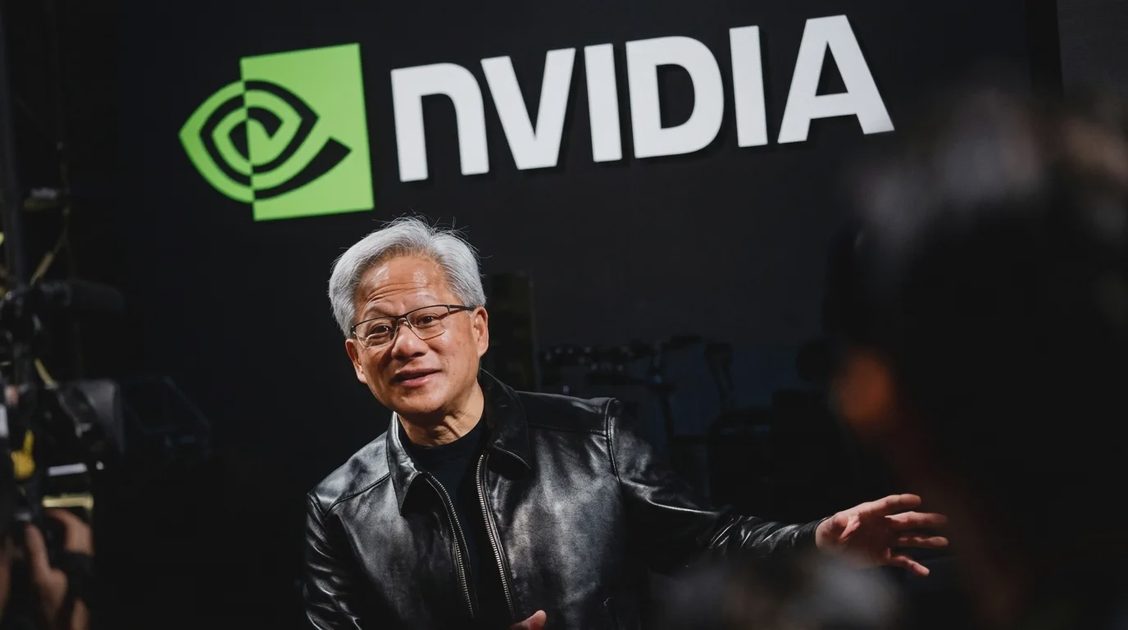
Huang is now gone. The engineering teams, the product roadmaps, and the existing CUDA ecosystem remain. Near-term financial results may not collapse. But the ability to make the next decision that looks wrong to almost everyone — the kind of decision that only becomes obviously correct a decade later — is harder to institutionalize. Companies that lose a founder of this type often continue to execute well on the strategy that already works. They are less reliable at inventing the strategy that does not yet make sense.
The next major inflection in computing will arrive whether or not NVIDIA is prepared for it. The open question is whether the company still has the internal capacity to place a large, multi-year, poorly understood bet when the consensus view is that the current business is already good enough.
A legacy that is already permanent
Whatever comes next, the record is clear. Huang leaves behind the first company in history to reach a $5 trillion valuation, the undisputed hardware foundation of the modern AI stack, and a chip architecture that has underpinned virtually every major breakthrough in the field for the past several years. That contribution is fixed in the historical record. It does not depend on who sits in the CEO chair tomorrow.
Markets and companies move on. Founders eventually step away. NVIDIA without its founder may settle into a more conventional trajectory — still powerful, still profitable, but less likely to redefine an industry the way it once did. Progress in artificial intelligence will continue; the pace and the shape of that progress may simply look different. Innovation itself does not pause for any single individual.
For those of us who hold broad technology exposure through vehicles such as QQQ, VGT, and SMH, the moment is worth watching closely. We are living through the aftermath of one of the more consequential founder exits in recent tech history. The next NVIDIA — or the next set of companies that will define the following computing era — is almost certainly already being built somewhere. The interesting question is whether we will recognize it before the rest of the market does.
Written November 12, 2026. Market data and corporate events are current as of publication. This piece is for informational and historical context only and does not constitute investment advice.
For AI tool features, rules and availability, refer to their official sites.


Leave your thoughts here, too.